
SQL Data Encryption is used to protect sensitive database information from unauthorized access by converting it into an unreadable format. It helps in:
- Securing personal and confidential data stored in databases.
- Protecting data at rest and in transit using cryptographic algorithms.
- Ensuring only authorized users with decryption keys can access the original data.
- Preventing data misuse even if a security breach occurs.
The SQL database supports various encryption methods, each with its unique characteristics and applications. Modern SQL databases support various encryption techniques, each catering to specific use cases and different levels of protection.
Types of SQL Data Encryption
This section explores the various methods of securing data in SQL databases, including Transparent Data Encryption (TDE) and Column-Level Encryption (CLE). Each type is explained with its use cases, implementation steps, and benefits.
1. Transparent Data Encryption(TDE)
Transparent Data Encryption (TDE) encrypts the entire database, including the data and log files stored at rest. This process runs seamlessly in the background without affecting user applications.
- TDE provides a transparent layer of security over the database with no significant changes required to the database schema.
- It operates at the file level, encrypting the database files stored on disk.
- Encryption and decryption occur automatically when data is read from or written to the database.
- TDE uses a symmetric key to secure the database.
Steps to Implement TDE
Let’s implement TDE using the following steps. First, we will set up a demo table for better understanding:
CREATE TABLE Student (
    StudentID INT PRIMARY KEY,
    StudentName VARCHAR(30) NOT NULL,
    RollNumber VARCHAR(10) NOT NULL
);

INSERT INTO Student VALUES
(1, 'John', '1234'),
(2, 'Michael', '4321'),
(3, 'Emily', '4554'),
(4, 'Sophia', '7896');
Output:

Step-by-Step Implementation
1. Create a Database Master Key
The master key secures the encryption hierarchy. Use the following command and choose the password of your choice
USE dba;
Go
Create MASTER KEY ENCRYPTION BY PASSWORD = "ABC@123"
Go
2. Create a Certificate
A certificate is used to protect the encryption keys.
USE dba;
Go
CREATE CERTIFICATE TDE_Certificate
      WITH SUBJECT = 'Certificate for TDE'
Go
3. Create an Encryption Key
Define the database encryption key using a specific algorithm:
USE dba
GO
CREATE DATABASE ENCRYPTION KEY
WITH ALGORITHM = AES_256
ENCRYPTION BY SERVER CERTIFICATE TDE_Certificate
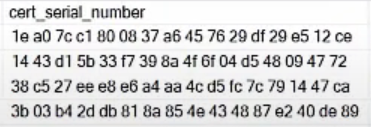
4. Enable Encryption
Configure the database to enable encryption using the below command
ALTER DATABASE dba
SET ENCRYPTION ON
Output
2. Column-Level Encryption
This method of encryption involves encrypting specific columns within a table rather than the whole table or the database. This method allows organizations to selectively secure their data.
- Column level encryption is useful while dealing with databases that stores a combination of both sensitive and unsensitive data.
- CLE also operates on the file level which encrypts the database files on the disk.
- CLE uses also use the asymmetric key for data encryption.
Steps to Implement CLE
In order to implement the encryption we are creating the same table Student we used for TDE for better understanding.
CREATE TABLE Student (
    StudentID INT PRIMARY KEY,
    StudentName VARCHAR(30) NOT NULL,
    RollNumber VARCHAR(10) NOT NULL
);

INSERT INTO Student VALUES
(10, 'James', '1234'),
(20, 'Olivia', '4321'),
(30, 'William', '4554'),
(40, 'Emma', '7896');
Output:

Step-by-Step Implementation.
1. Create a Database Master Key
USE Student;
GO
CREATE MASTER KEY ENCRYPTION BY PASSWORD = '123@4321';
2. Create a Self-Signed Certificate
USE Student;
GO
CREATE CERTIFICATE Certificate_test WITH SUBJECT = 'Protect my data';
GO
3. Configure a Symmetric Key
CREATE SYMMETRIC KEY SymKey_test WITH ALGORITHM = AES_256 ENCRYPTION BY CERTIFICATE Certificate_test;4. Encrypt Specific Columns
ALTER TABLE Student
ADD RollNumber_encrypt varbinary(MAX)
Output

The RollNumber_Encrypted column will now contain encrypted values, rendering them unreadable to unauthorized users.
Benefits of SQL Data Encryption
- Data Protection: Ensures sensitive data remains secure from unauthorized access.
- Enhanced Security: Reduces the risk of data breaches and leaks.
- Data Integrity: Maintains the accuracy and consistency of sensitive data.
- Selective Encryption: Allows encrypting only critical data, optimiing performance.
- Compliance: Meets regulatory requirements for data protection, such as GDPR or HIPAA.