The York County SPCA is pleased to announce the results of its annual meeting, at which the Board of Directors elected a new executive committee and board members.
The following individuals have been elected to serve in leadership roles for the York County SPCA’s Board of Directors:
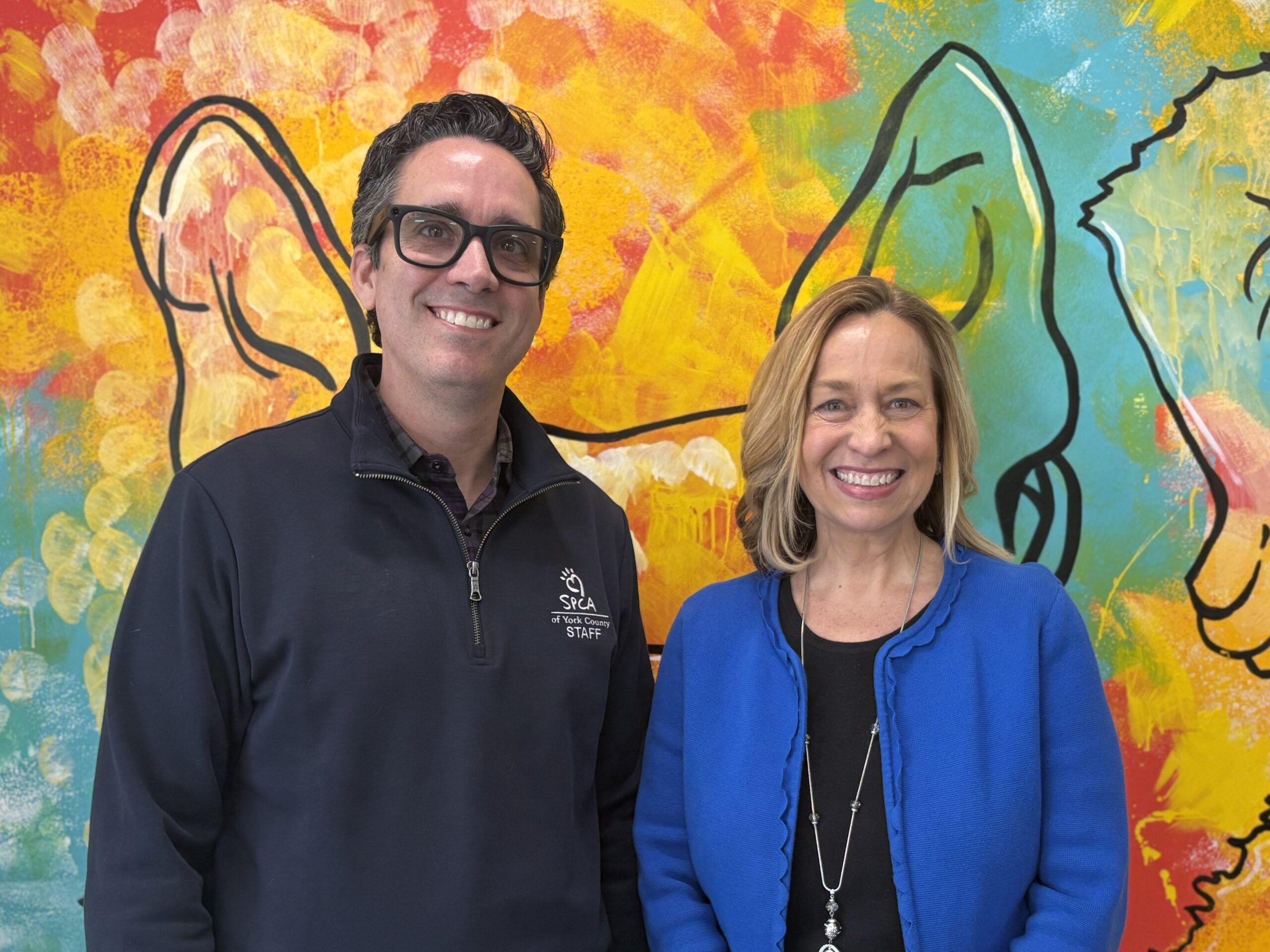
- President – Sue DeStephano, First Capital Federal Credit Union
- Vice President – Brett Marcy, Apollo Communications
- Secretary – Em Lonardi, Retired
- Treasurer – Sean Mansberger, emc, CPA’s LLC
- Immediate Past President – Katie Mahoney, York County Economic Alliance
“Our board plays a critical role in advancing our mission and strengthening our impact in York County. I am excited to welcome our new executive committee and new board member,” said Steven Martinez, YCSPCA Executive Director. “Each brings valuable expertise, leadership, and a deep commitment to our lifesaving mission. Their guidance will help us execute our strategic plan, expand access to services, and ensure we remain a trusted resource for the community we serve.”
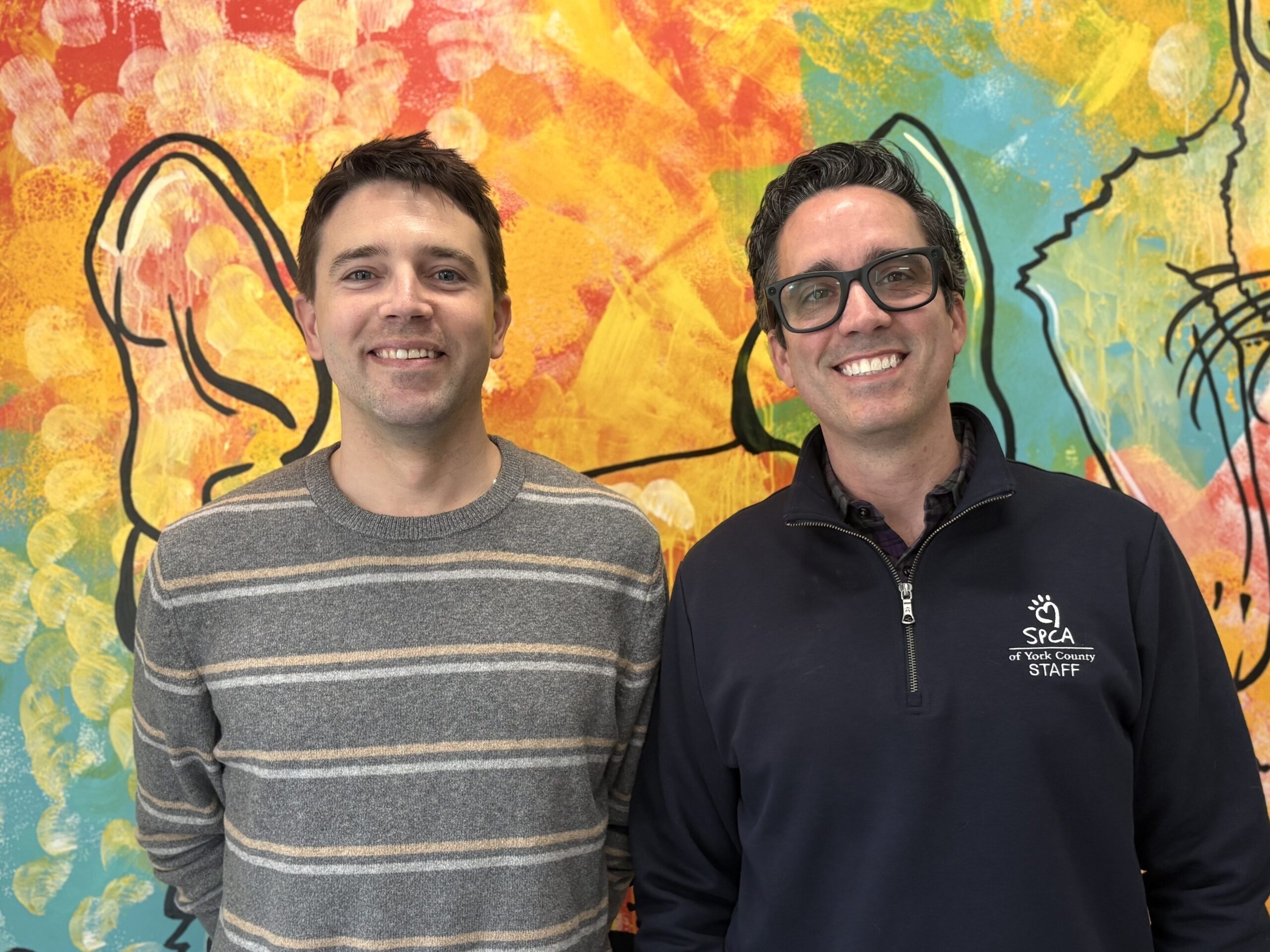
“As I step into this role during our 100th anniversary year, I’m filled with gratitude for what our volunteers, staff, and board members have built together through the years—and excitement for what’s ahead,” said Sue DeStephano, newly elected board president, “when care and compassion lead the way, amazing things happen for animals and the people who love them.”
In addition to electing new board leadership, Steve Smith, Executive Director of the PA House of Representatives Judiciary Committee, joined the organization as a board member.
“I am deeply grateful to our previous executive committee and outgoing board members for their service and leadership,” said Martinez. “They helped guide our organization through important growth and transformation. Because of their dedication, we are stronger, more focused, and better positioned to meet the evolving needs of animals and people in our community. Their impact will continue to shape our work for years to come.”
“We are thrilled to welcome our newly recruited volunteer board members to the Board of Directors,” said Steven Martinez, Executive Director at York County SPCA. “Their commitment to animal services and their diverse skill sets will undoubtedly contribute to the continued success of our organization and help us achieve our strategic goals.”
Media Contact:
Kristen Dempwolf
Communications Director
[email protected]
Since 1926, we have sheltered and cared for sick, injured, abandoned, and lost animals, working tirelessly to find them loving, permanent homes. Over the decades, our services have grown to meet the needs of our community, including spay and neuter programs, human service programs, and public education on animal health and safety. In 2022, we were officially recognized as a no‑kill shelter, achieving a save rate above 90 percent, ensuring we save every animal in our care that can be saved. Since 2022, we have consistently achieved a save rate of at least 93 percent each year.
To celebrate this historic year, we are proud to unveil our official 100th anniversary logo, created in partnership with local designer Stephanie Benamor, symbolizing a century of compassion and service to the York County community.
As part of our 100-year celebration, we are thrilled to be the 2026 season presenting partner with the York Revolution to honor this milestone. Together, we will celebrate a century of care for animals and the communities that support them. Learn more here: York Revolution Press Release

Get ready to celebrate with us! We’ll soon announce a special community event to mark this incredible milestone. Throughout 2026, we’ll be hosting more celebrations and offering opportunities for the community to join us in supporting our lifesaving work. Visit our events calendar to learn more.
Thank you for being part of our journey. Here’s to the next 100 years of making a difference for animals and the communities that depend on us!
]]>Your generosity fuels the most essential parts of our work: providing safe shelter for stray and displaced animals, offering medical care and rehabilitation to animals in need of a second chance, and supporting community members who rely on us to help keep families and pets together.
Every contribution helps ensure that animals in York County receive the care and compassion they deserve.
Easy and Impactful Ways to Make a Year-End Gift
Whether you prefer a straightforward donation or a tax-smart giving strategy, there are many meaningful ways to support the YCSPCA before December 31.
- Traditional Gifts
- One-time or monthly donations: Make a gift online, mail a check, or set up a recurring donation. These gifts provide immediate support for animals who need food, safety, medical care, and love right now.
- Gifts Through Retirement Accounts
- Qualified Charitable Distributions (QCDs): If you are 70½ or older, you can give directly from your IRA. This gift can count toward your Required Minimum Distribution (RMD) and may reduce your taxable income.
- IRA charitable rollover: A similar way to make a tax-advantaged donation directly through your retirement account.
- Gifts of Stock or Securities
- Appreciated stock: Donating stocks or mutual funds you’ve held for over a year may help you avoid capital gains taxes while maximizing your impact for the animals in our care.
- Employer-Based Giving
- Matching gifts: Many employers match charitable contributions — doubling or even tripling your gift. Check with your HR department or benefits portal to see if your workplace participates.
- Legacy and Planned Gifts
- Bequests in your will: A simple, powerful way to leave a legacy of compassion without impacting your finances today.
- Beneficiary designations: Name the YCSPCA as a beneficiary of your IRA, life insurance policy, or retirement plan. It’s an easy way to make a long-lasting impact without changing your will.
Every donation makes a real and immediate difference for the animals who need us most. Thank you for considering a year-end gift to the York County SPCA!
If you have any questions, contact Jessica Hoffman at [email protected] or 717-400-1994.
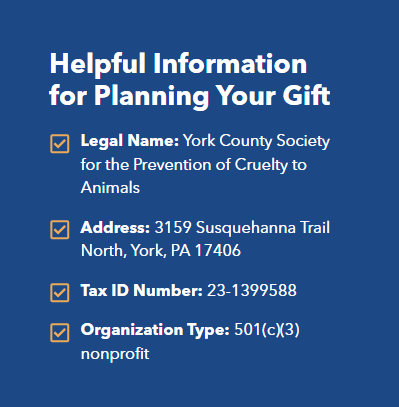
Please note: The York County SPCA does not provide legal, tax, or financial advice. We encourage you to consult a professional advisor to determine the best giving options for your individual circumstances.
]]>While a diabetes diagnosis may sound intimidating at first, diabetic pets can—and do—live long, happy, healthy lives. With proper management and a supportive family, these incredible animals often become some of the most grateful, affectionate companions you’ll ever meet.
What Is Diabetes in Pets?
Just like in humans, diabetes in cats and dogs occurs when their bodies cannot regulate blood sugar properly. Most pets are diagnosed with diabetes mellitus, which happens when the pancreas doesn’t produce enough insulin or the body stops responding to it effectively.
Common signs include:
- Increased thirst
- Frequent urination
- Weight loss despite a good appetite
- Lethargy
- Cloudy eyes (dogs)
- Changes in coat quality
If you notice these symptoms in your pet, timely veterinary care is essential.
Diabetic Pets in Our Care
At the YCSPCA, we often welcome animals who arrive with untreated or undiagnosed diabetes. Some need immediate medical stabilization. Others need daily insulin, specialized diets, regular monitoring, and a patient routine to help them feel their best.
These pets are resilient. Many come to us after months—sometimes years—of feeling unwell, and once they receive proper care, their personalities bloom. They rediscover energy, appetite, and curiosity. They begin to play again. They trust again.
And some, like Oscar, show just how incredible life with diabetes can be once they’re given the chance. Oscar, one of our diabetic residents, didn’t just overcome his medical challenges—he thrived. With consistent care and the support of our medical team, Oscar stabilized beautifully and caught the eye of a loving adopter who understood his needs. Today, Oscar is living his best life in his forever home, proving that diabetic animals are just as capable of joy, adventure, and a life well lived as any other pet.

Every diabetic pet who enters our care receives:
- Comprehensive veterinary exams
- Daily insulin administration
- A tailored diet and feeding schedule
- Monitoring for blood glucose changes
- Ongoing support from our medical and animal care teams
This level of care is possible because of the generosity of our community.
Life With a Diabetic Pet: More Manageable Than You Think
Many adopters initially hesitate when they hear that a pet has diabetes—but, much like with humans, daily management quickly becomes a normal routine. Most diabetic pets require:
- Twice-daily insulin injections
- Scheduled mealtimes
- Regular vet visits
In return, these pets offer unconditional love and gratitude. Some diabetic cats even go into remission with proper treatment.
When you adopt a diabetic pet, you’re giving them more than a home—you’re giving them the chance to thrive.
How You Can Support Diabetic Pets
 Adopt a Diabetic Pet
With a little structure and a loving routine, diabetic pets make wonderful companions.
Foster a Special-Needs Pet
A calm home helps diabetic pets stabilize faster and feel more comfortable.
Donate to Medical Care
Your support provides insulin, prescription diets, testing supplies, and essential veterinary care.
Share Their Stories
Awareness helps these pets find the homes they deserve.
A Community that Cares
Every day, we witness the incredible resilience of diabetic pets—animals who continue to love wholeheartedly despite their challenges. Oscar’s story is just one example of the many lives transformed because of our community’s compassion.
This Diabetes Awareness Month, we invite you to learn, share, and support. Together, we can ensure that every pet—regardless of diagnosis—has the opportunity to live a healthy, happy life.
]]>The holiday season is right around the corner, and the York County SPCA team is gearing up for a busy stretch filled with community events, celebrations, and—of course—caring for the animals who count on us every single day. To help you plan your visits, adoptions, and donation drop-offs, we’ve put together a full list of our upcoming holiday closures and adjusted hours.
We appreciate your understanding as we balance serving our community with ensuring our dedicated staff can enjoy well-deserved time with their families and teammates. 
Brougher Companion Animal Shelter holiday schedule:
Friday, November 21
Closing at 2:00 p.m.
The shelter will close early for our Staff Holiday Party.
No public browsing hours.
Thursday, November 27 – Thanksgiving Day
Closed all day
We hope you enjoy the holiday with family, friends, and lots of good food!
Saturday, December 6
Closed for Browsing Hours
Our team will be hosting Pet Photos with Santa! The shelter will remain closed to the public for browsing, but Santa will be busy spreading cheer for registered participants. Register here!
Wednesday, December 24 – Christmas Eve
Closing at 2:00 p.m.
Thursday, December 25 – Christmas Day
Closed all day
Wednesday, December 31 – New Year’s Eve
Closing at 2:00 p.m.
Thursday, January 1 – New Year’s Day
Closed all day
Spay/Neuter Clinic holiday schedule:
Wednesday, November 26 – Thursday, November 27
Monday, December 22 – Friday, January 2
We will reopen on Monday, January 5.
We encourage supporters to plan visits and donations around these dates and to keep an eye on our social media for reminders, last-minute updates, and festive happenings at the shelter. Thank you for helping us make this season bright for the animals in our care. From all of us at the York County SPCA, we wish you a safe, warm, and happy holiday season! 
The truth is that black cats are just as sweet, playful, and affectionate as any other cat. Ask anyone who has one curled up on their lap, and they’ll tell you these beautiful felines bring nothing but joy. Their shining coats, glowing eyes, and unique personalities make them every bit as special—sometimes even more so. What they offer isn’t bad luck, but unconditional love.
It’s easy to see why people might believe the old stories; myths have a way of sticking around. But when we look past them, we discover the reality: a black cat rubbing against your legs, purring softly, or racing through the house after a toy mouse is nothing short of a blessing. They want what every cat wants—to be safe, to be loved, and to belong.
Every time someone chooses to adopt a black cat, they’re not just saving a life—they’re rewriting a story. They’re proving that compassion is stronger than superstition, and that love sees beyond color. These cats are not shadows to be feared, but companions waiting to brighten our homes with warmth, laughter, and loyalty.
So, the next time you see a black cat, don’t look for bad luck. Look for beauty, friendship, and love. You just might find your perfect match.

The York County SPCA Joins the ASPCA’s Rescue Effect Campaign
The York County SPCA is proud to join animal shelters and rescues across the country in participating in the ASPCA’s Rescue Effect campaign. This initiative raises awareness about the importance of pet adoption and helps place more animals into loving homes.
As part of this effort, the YCSPCA will host two additional Free Adoption Fridays presented by the ASPCA on:
- October 3
- October 10
During these special adoption events, fees will be waived for available adult dogs (older than six months).
Like many shelters nationwide, the YCSPCA is facing high intake numbers, particularly strays. “Thanks to the Rescue Effect from the ASPCA, we can eliminate an adoption barrier and get pets into loving, permanent homes,” said Kristen Dempwolf, YCSPCA Communications Director.
What Is The Rescue Effect?
The Rescue Effect is a national campaign launched by the ASPCA® (The American Society for the Prevention of Cruelty to Animals®) and proudly supported this year by Chewy. Running from August through Adopt-a-Shelter-Dog Month in October, the campaign highlights the lifesaving impact of pet adoption.
With nearly six million dogs and cats entering shelters and rescues across the U.S. in 2024, shelters are fuller than ever. Many animals, especially dogs, are spending longer periods in shelters before being adopted. By choosing adoption, you’re not just giving one pet a forever home—you’re helping shelters like ours save even more animals.
As ASPCA President & CEO Matt Bershadker explains:
“When we work together, we save more lives. When you choose pet adoption, you make a lifesaving impact that benefits more than one animal.”
This year, the ASPCA is providing $2 million in grants to shelters and rescues across 43 states, including more than 100 organizations holding fee-waived adoption events. These grants help cover adoption fees and support shelters’ operating costs so that more animals can find loving homes.
Free Adoption Fridays at the YCSPCA
Our Free Adoption Fridays are designed to make pet adoption accessible while creating space for more animals in need.
What to Know Before You Come:
- First come, first served – no appointments accepted and not for pre-scheduled adoptions.
- The list of available dogs will be shared Friday mornings on our social media and posted in the shelter lobby.
- Foster dogs are not included—only dogs onsite at the YCSPCA are eligible.
- Please bring your own collar and leash if you plan to adopt (limited supplies available for purchase).
- Most dogs can go home the same day, though some may require a follow-up pickup.
- This opportunity is for dogs only, and only during the listed Free Adoption Friday events.
 Learn more at: ycspca.org/series/free-adoption-fridays-presented-by-aspca
How You Can Be Part of the Rescue Effect
Even if you aren’t able to adopt right now, there are many ways to create a ripple of positive change:
- Foster a Pet – Providing temporary care opens up space in the shelter for more animals.
- Donate Supplies or Funds – Your support helps us provide food, medical care, and enrichment.
- Advocate – Encourage local leaders to support animal shelters in your community.
- Spread the Word – Share adoption events, success stories, or use the hashtag #TheRescueEffect to inspire others.
Why Adoption Matters
When you adopt, you save two lives: the pet you welcome into your home and the one who takes their place in the shelter. It’s a cycle of compassion that strengthens our entire community of animal lovers.
At the York County SPCA, every adoption means another wagging tail, another purr of contentment, and another chance for us to help the animals still waiting. That’s the Rescue Effect in action.
About the York County SPCA
The York County Society for the Prevention of Cruelty to Animals (SPCA) is a 501(c)(3) non-profit organization dedicated to providing long-term human and animal services to residents of York County through programs that find permanent, loving homes for displaced and stray animals, help control animal population growth, investigate and prosecute cruelty offenders, and educate the public about animal wellness and safety. We do not receive funding from the national ASPCA. We are a community resource supporting all York County residents and their animals—learn more at www.ycspca.org.
About the ASPCA®
Founded in 1866, the ASPCA® (The American Society for the Prevention of Cruelty to Animals®) was the first animal welfare organization to be established in North America and today serves as the nation’s leading voice for vulnerable and victimized animals. The ASPCA assists animals in need through on-the-ground disaster and cruelty interventions, behavioral rehabilitation, animal placement, legal and legislative advocacy, and the advancement of the sheltering and veterinary community through research, training, and resources. For more information, visit www.ASPCA.org.
]]>On the afternoon of November 13th, 2024, panic gripped the Lindsay family when their youngest—and furriest—family member, Lenox, vanished in a flash. What began as a playful moment in the backyard quickly turned into every pet owner’s worst nightmare.
“We never worried about him getting out—he’s always supervised during playtime,” said Mrs. Lindsay. “But the moment my husband looked away, Lenox bolted under the fence. It happened so fast, we couldn’t even react.”
The family immediately sprang into action, scouring city streets and nearby neighborhoods in search of their beloved pup. But after three long hours with no sign of Lenox, the hope that he’d come trotting home that evening began to fade.
As night fell and temperatures dropped, the worry deepened. The Lindsays turned to their online community for help—posting on neighborhood forums, social media pages, and lost pet resources like Find Toby PA. Their quick action paid off: a community member who had found Lenox saw the posts and contacted the family to let them know he was safe at the York County SPCA.
“The woman who found Lenox told me she had gone to the local police station, handed him over to the authorities, and they were able to bring him to the shelter—keeping him safe from the cold weather we feared he wouldn’t survive,” said Mrs. Lindsay.
Joy was restored when the family reunited with Lenox the very next day. Thanks to the efforts of Find Toby PA and the YCSPCA, Lenox made a warm return to his family—and received some important preventative care for the future.
“When we found Lenox at the shelter, we immediately scheduled to have him microchipped. Had I known how highly recommended microchipping is, I would have done it sooner,” said Mrs. Lindsay.
Lenox’s story is more than just a tale of a lost dog—it’s a reminder of how quickly the unexpected can happen, and how powerful hope, persistence, and community can be in bringing our loved ones home.
At the YCSPCA, we’re honored to be part of a community that ensures every pet is forever loved, safe, and protected—no matter what.
So how exactly do animals come into our shelter? It’s more intentional than you might expect—and that’s by design.
Our Intake Model: Rooted in National Best Practices
Our admissions process follows national best practices and is guided by one central goal: to give every animal the best possible chance at a live outcome. We do not euthanize animals for space. Instead, we actively manage intake in a way that protects animals, supports the community, and ensures our team has the capacity to provide quality care.
The York County SPCA only accepts animals from within York County, Pennsylvania, and proudly fulfills our contracts with most York County municipalities to provide stray animal services.
We Prioritize Urgency and Community Impact
Outside of our municipal stray housing contracts, we carefully evaluate other types of animal intakes to ensure we are prioritizing the most urgent cases. This includes:
- Pets in crisis due to owner hospitalization, eviction, or death
- Pets living in a dangerous or unsafe environment
- Injured or ill animals requiring urgent medical care
By managing non-stray intake intentionally, we ensure our shelter remains available to those animals with the greatest need, without compromising care or outcomes.
Keeping People and Pets Together

One of the most effective ways we manage shelter intake is by helping to prevent unnecessary surrender in the first place. Our human service programs are designed to support York County families through tough times so they can remain united with their furry family members, because often, a little help can make the difference between a pet staying in their home or entering the shelter system.
Our safety net services include:
- Pet Food Pantry: Free pet food for families facing temporary financial hardship
- SafePet Program: Emergency boarding for pets of individuals fleeing domestic violence, loss of housing, or entering medical care.
- CARMA Program: Low-cost emergency veterinary care for urgent but treatable medical conditions
- Rehoming Resources: Support for families who need to rehome a pet, including our partnership with Adopt-a-Pet.com for owner-to-owner adoptions
These programs are part of a growing movement in animal welfare that recognizes the importance of keeping the bond between people and pets intact whenever possible.
Stray Dogs
When stray dogs are brought in from contracted municipalities by local law enforcement, animal control officers, or PA state dog wardens, we welcome each one with open arms, no matter their age, breed, behavior, or condition. We then follow Pennsylvania’s legal 48-hour stray hold process. This period gives families time to reclaim their missing pets, while we provide food, shelter, veterinary care, and safety. For example, instead of the public chasing a stray dog with unknown health and behavior, it’s safer for a trained professional with proper safety equipment to lawfully capture the dog, collect appropriate information, and safely transfer the animal into our care. If these pets are not reclaimed, our staff and volunteers work to find them loving, permanent homes.
Community Cats
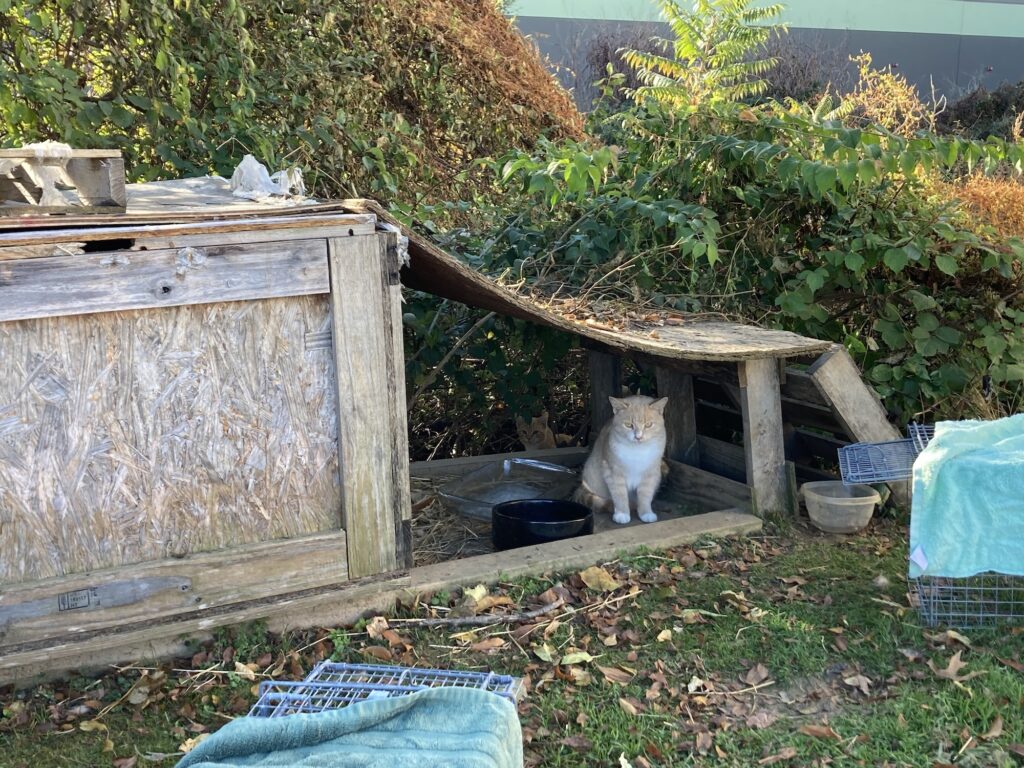
Not all cats seen outdoors are lost or in need of rescue. Many are what we call community cats—a broad term that includes feral cats, loosely owned neighborhood cats, indoor/outdoor pets, and other free-roaming cats who are accustomed to living outside. These cats have often spent their entire lives outdoors and are well-adapted to their environments.
For healthy community cats living in stable locations, removal and shelter intake is not in their best interest. Confinement in a shelter can lead to extreme stress, illness, and—in the case of unsocialized cats—behavioral challenges that make adoption nearly impossible. For cats over three pounds, we focus instead on Trap-Neuter-Return (TNR): humanely trapping the cat, spaying or neutering, vaccinating, and returning it to its original location. This proven strategy reduces overpopulation, supports public health, and improves the long-term welfare of outdoor cat populations.
We evaluate each situation individually. If a cat appears sick, injured, or without any consistent caregiver, we will bring it into our care for treatment. Suppose the cat cannot safely return to its original environment. In that case, we may consider placement through our Working Cat program, a lifesaving alternative for cats who are not suited for indoor living but still deserve a chance at a meaningful life. These cats are placed with barns, warehouses, breweries, and other facilities where they receive food, shelter, and basic care while helping control pests naturally.
Suppose a cat cannot be returned outdoors for medical or safety reasons and is behaviorally suitable for indoor life. In that case, we make every effort to place that cat through our traditional adoption program.
A Lifesaving Shift in Practice
Many people are surprised to learn that feral or unsocialized cats are often not candidates for traditional adoption. For years, shelters across the country struggled to find safe and humane solutions for community cats. The result was heartbreaking.
In 2018, the cat euthanasia rate at the York County SPCA was 70.1%. Many of these were healthy, free-roaming cats whose only barrier to survival was a shelter system that wasn’t built to serve them.
A few years ago, we implemented a data-supported win-win strategy that saves cat lives while simultaneously reducing their numbers. Today, thanks to strategic changes in our intake policy and a stronger focus on programs like TNR, Working Cat placements, and community education, our cat euthanasia rate fell to 4.5% and our spay/neuter efforts increased over 85% since 2019. By boosting our spay/neuter and vaccination efforts, we fill the community with healthy sterilized cats, which will reduce their numbers over time while keeping the public safe.
This transformation didn’t happen overnight—it required commitment, innovation, and an honest reckoning with what it means to save lives and reduce population growth rates effectively. These policies have spared thousands of animals and the people who care for them the pain of unnecessary loss.
Found Kittens

Each year, especially from spring through fall, we receive an influx of kittens—some just hours old. While it’s natural to want to help, the best thing you can do for a tiny kitten is pause before intervening.
If you find a kitten under three pounds, we recommend leaving it where it is unless it appears injured, ill, or in immediate danger. In most cases, the mother is nearby, hunting or hiding, and will return shortly. Removing kittens too soon can put them at higher risk, mainly because their immune systems are not yet strong enough for a shelter environment. If you come across a kitten who is hurt, unwell, or in a dangerous situation, regardless of their weight, please contact us immediately to determine the best next steps.
If you’re sure the mother is not returning or is deceased, we encourage you to consider becoming a temporary foster. With your care and our support, the kitten can grow big enough (around three pounds) to be vaccinated, sterilized, and adopted. We’re here to support you every step of the way with fostering, providing food, supplies, and medical care. But if fostering isn’t an option for you, that’s okay, we’ll still take in the kitten(s) and work with our foster network to help keep them out of the shelter. Thanks to our dedicated network of foster families, hundreds of kittens each year are given the chance to grow, thrive, and eventually find loving homes. Every situation is unique, and we encourage you to visit our Community Cats page to learn more before taking action.
Owned Pets: Intake By Appointment
We understand that giving up a pet is often the result of a personal crisis—whether due to housing, finances, or changes in health. When a family can no longer care for a pet, we’re here to help.
To provide the best outcome for each animal, we accept owned pets by appointment only. This allows us to:
- Understand the pet’s history and needs
- Prevent overcrowding and stress-related illness
- Create individualized placement plans for adoption, foster, or rescue transfer
We also offer alternative solutions, like medical assistance or support with rehoming, to help the animal safely transition without entering the shelter.
Working Together to Save Lives
Modern animal sheltering is about more than housing—it’s about building a community-based safety net that protects both animals and people. At the York County SPCA, we’re proud to follow a proven, best-practice model that supports our municipal partners, honors our role in protecting public health and safety, and ensures all the animals in our care have the best chance at a live outcome.
By understanding how animals enter our care, you help us ensure that every pet receives the time, attention, and support they need to thrive.
If you have questions about our admissions process or need support, visit our Shelter Admissions page or email [email protected].
]]>New Public Browsing Hours:
- Tuesdays, Thursdays, and Fridays: 12:00 PM – 4:00 PM
- Saturdays: 10:00 AM – 2:00 PM (unchanged)
- Open by appointment: Monday – Sunday, 8 a.m. to 4:30 p.m.
Why the Change?
This adjustment allows our team dedicated time in the mornings to provide essential care to our shelter pets, handle customer service inquiries, and prepare for the day ahead. By aligning our browsing hours with when we have the most staff available in our lobby, we can offer a more positive experience for walk-in visitors. We will be open by appointment seven days a week from 8 a.m. to 4:30 p.m.
We also hope the later weekday hours and the addition of Fridays for public browsing will make it easier for more community members to stop by and meet their future furry family members.
We’re Here for You
We understand how important it is to be accessible to the public, and this new schedule reflects our ongoing effort to balance that accessibility with the needs of our animals and team. Thank you for your continued support and understanding as we navigate this transition.
For more information, visit www.ycspca.org or email [email protected].
]]>