-
-
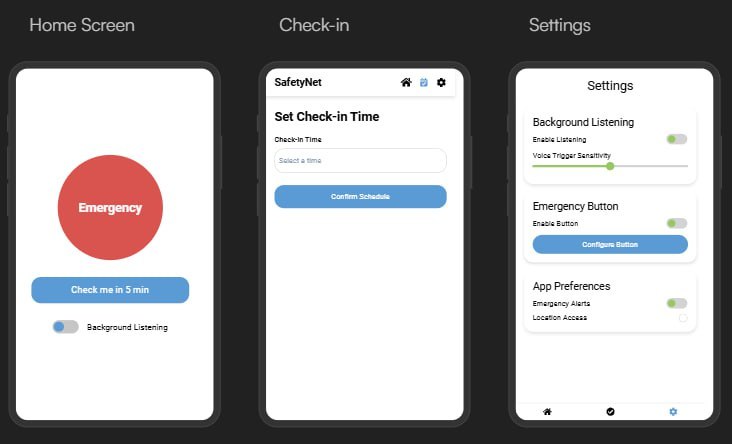
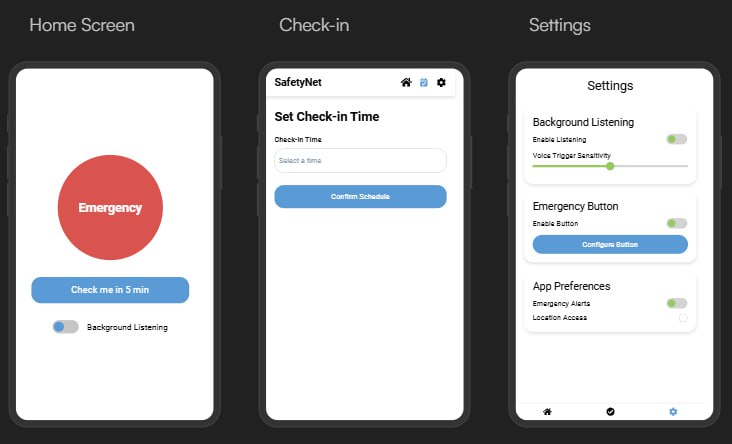
the ui
Inspiration
The inspiration behind SafeWave came from our personal experiences as female software engineering students at Addis Ababa University in Ethiopia. We have witnessed widespread harassment faced by women in our city, country, and globally. This issue deeply motivated us to create a solution that empowers women by providing them with an easy-to-use, hands-free safety app. Our goal was to give women a tool that could quickly alert their emergency contacts in dangerous situations, helping to ensure their safety when they need it the most. What It Does
SafeWave is an AI-enabled personal safety app designed to provide real-time location tracking and emergency alerts. The app offers two key features:
Quick Check-ins: The app periodically checks in with the user. If the user does not respond to a check-in, it automatically sends an emergency alert with the user’s location to their pre-selected contacts.
Voice-Activated Emergency Alert: The app can recognize emergency keywords like "Help" or "Danger" through voice recognition, triggering an instant alert with the user’s location to their emergency contacts. This feature ensures that users can send an alert even when they cannot physically interact with the app.
How We Built It
SafeWave was built using a combination of Google’s AI tools and APIs:
Google Maps API: For real-time location sharing, allowing emergency contacts to track the user’s location. Google Speech-to-Text API: For recognizing emergency keywords and triggering alerts through voice activation. express: For secure storage of user data and emergency contact information. Nodemailer: Used for sending emergency email notifications, as we were unable to afford paid SMS services.
Challenges We Ran Into
Being students at Addis Ababa University, we faced several challenges in building SafeWave:
Funding and Payment Challenges: We didn’t have access to a credit card for paid services like SMS and Play Store deployment. We borrowed a card from a friend and used Nodemailer to send email alerts as a free alternative.
Deployment Difficulties: We couldn’t deploy the app on the Play Store due to associated costs. Short Development Timeframe: We completed SafeWave in just 3 days, which made it difficult to fully polish every feature and test it thoroughly.
Accomplishments That We’re Proud Of
We are proud of building a functional, real-time safety app that could make a significant difference in women’s safety. Despite the constraints, we successfully integrated voice-triggered emergency alerts, real-time location tracking, and an intuitive user interface. Our ability to complete the app within just 3 days was an achievement we are proud of, given the time and resource limitations. What We Learned
Through this project, we learned the importance of creating safety solutions that are accessible, reliable, and easy to use. We gained hands-on experience with AI-powered tools, especially in voice recognition and real-time location sharing. We also learned how to work within tight constraints, optimizing our time and resources to deliver a working prototype. What’s Next for SafeWave
Looking forward, we plan to enhance SafeWave with the following improvements:
Enhanced Voice Recognition: Improving the accuracy of voice-triggered alerts to detect more nuanced emergency phrases. Wearable Integration: Expanding the app’s functionality to work with smartwatches and wearables, providing even quicker access to safety features. AI-Driven Context Detection: Incorporating AI to detect distress signals based on changes in speech patterns, movement, or location anomalies. Global Expansion: Adding support for multiple languages and cultural considerations to make SafeWave accessible to a wider audience. Funding and Deployment: Securing funding to deploy the app on the Play Store and enhance the service with paid tools for SMS alerts.
This concise format covers all the key aspects of your project, addressing the inspiration, features, challenges, and future goals for SafeWave. Let me know if you need to adjust or expand any section!
Built With
- express.js
- flutter
- map
- nodemailer
- voice


Log in or sign up for Devpost to join the conversation.