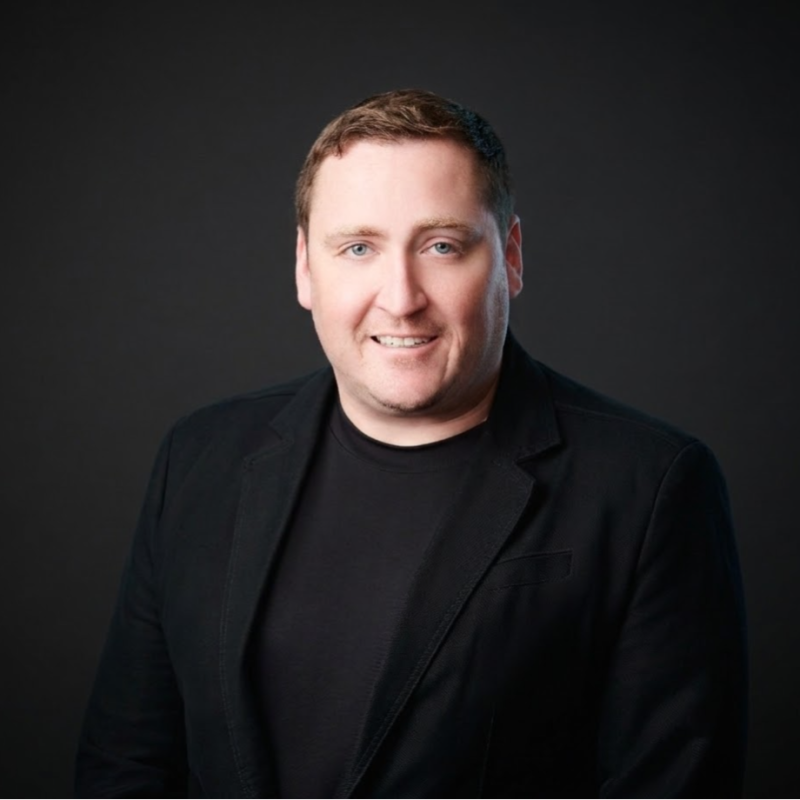
Brian Daly
AT&T
Brian Daly
Brian is a distinguished AT&T Fellow and Assistant Vice President at AT&T. With over two decades of experience in forecasting and analyzing technology trends, including 5G, Next G, IoT, and cybersecurity, Brian focuses on enabling global connectivity through softwarization, public safety initiatives, and national security solutions. Brian’s contributions are pivotal to mission-critical services such as FirstNet, earthquake early warning systems, wireless emergency alerts, and innovative IoT applications like C-V2X and UAS/UAVs. As a thought leader in telecommunications, he collaborates with industry, government, and defense stakeholders to identify disruptive innovations and their impact on global technology landscapes. With a deep understanding of standards and industry alliances, Brian plays a key role in strategy development. He leverages coalitions across global enterprises, interacts with C-level executives, and engages with high-level government leaders, including the White House, Congress, DoD, and FCC. His direction of AT&T’s global strategy in industry standards showcases his prowess as a technology visionary within the global standards landscape. Brian’s expertise spans emerging technologies and industry trends over the next 5 to 10 years. His focus includes critical areas such as public safety, mission-critical services for FirstNet, wireless emergency alerts, earthquake early warning systems, C-V2X, UAVs, cybersecurity, National Security Emergency Preparedness (NSEP), and critical infrastructure protection. His extensive involvement in high-profile programs includes collaborations with the DHS, DISA, NATO, and DoD. Brian is a pivotal contributor to the Alliance for Telecommunications Industry Solutions (ATIS), serving on the Board, TOPS Council, and Standards Committees, where his efforts have led to driving industry direction and the implementation of essential industry standards. He holds key appointments on the FCC’s Technological Advisory Council (TAC), co-leading the 6G Working Group, and the Communications Reliability, Security, and Interoperability Council (CSRIC), where he co-leads the 6G Security Working Group. Additionally, Brian co-leads the National Spectrum Consortium’s 5G Working Group and is an active member of the FBI’s InfraGard partnership. His industry leadership roles further include co-chairing the O-RAN Alliance Technical Steering Committee, the Next G Alliance Steering Group, and the GSM Association’s North American Fraud Forum and Security Group. He previously co-chaired the ANSI Unmanned Aircraft Systems Standardization Collaborative Critical Infrastructure & Environment Working Group.
Brian’s academic credentials include a B.S.E. and M.S. in Electrical Engineering from Arizona State University, with specializations in communication systems and advanced electromagnetic engineering. He holds an FAA Part 107 remote pilot certification and an FCC Extra Class amateur radio license. As a 2nd Lt. in the U.S. Air Force Auxiliary/Civil Air Patrol, Brian serves as Assistant Aerospace Education Officer and Assistant Communications Officer for his squadron. Additionally, he is the AT&T coordinator for the Department of Homeland Security’s SHAred RESources (SHARES) High-Frequency (HF) Radio Program and a U.S. Army NETCOM Military Affiliated Radio System auxiliarist. In recognition of his contributions to the field, Brian has been honored with the ATIS President’s Award, the ANSI Meritorious Service Award, and the NG911 Institute Industry/Private Sector Award for his leadership in emergency communications. His prolific career is further evidenced by over 180 issued patents in telecommunications, public safety, and cybersecurity. Brian’s dedication and achievements underscore his significant impact on the telecommunications industry and his commitment to advancing technology for a safer and more connected world.
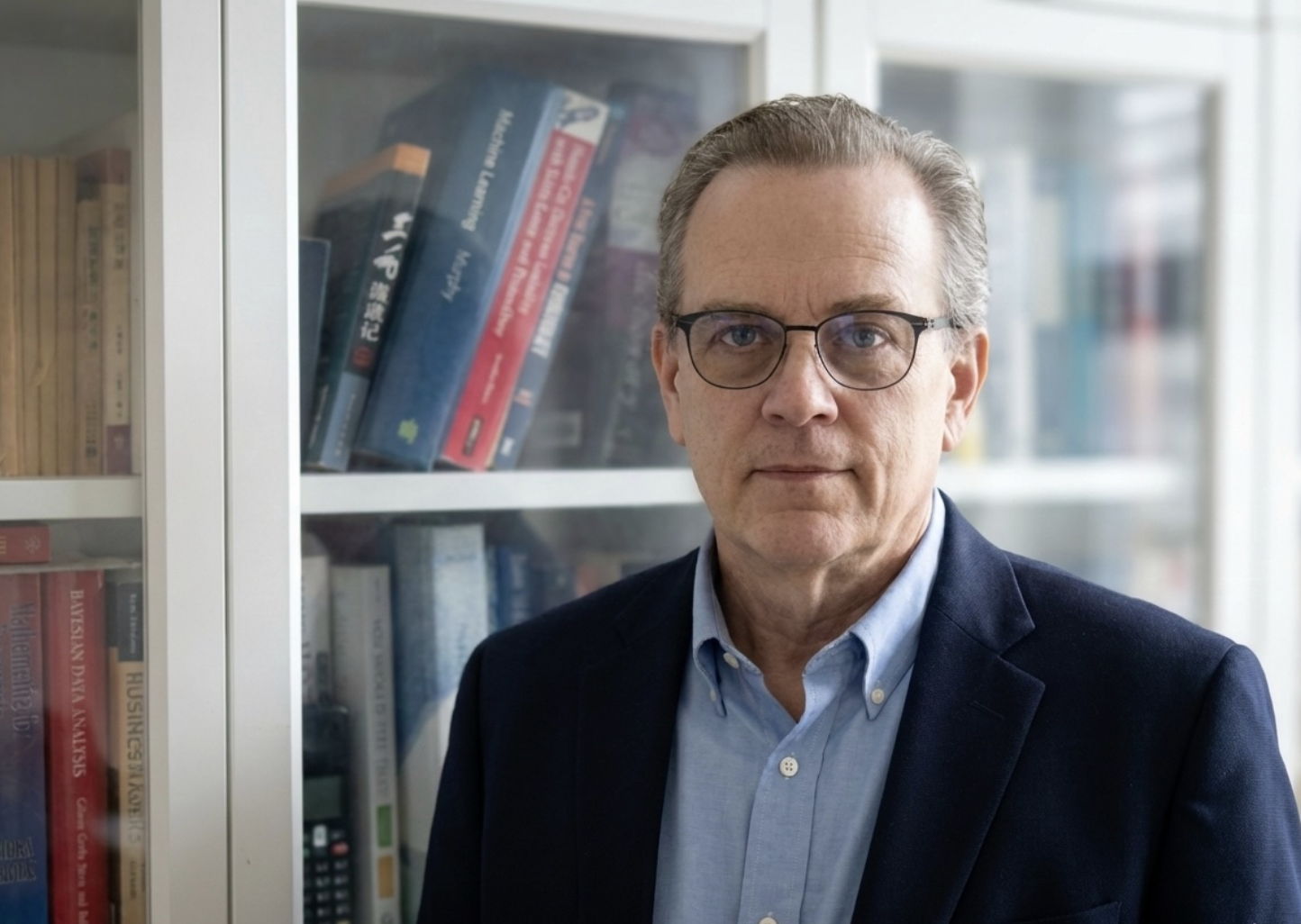
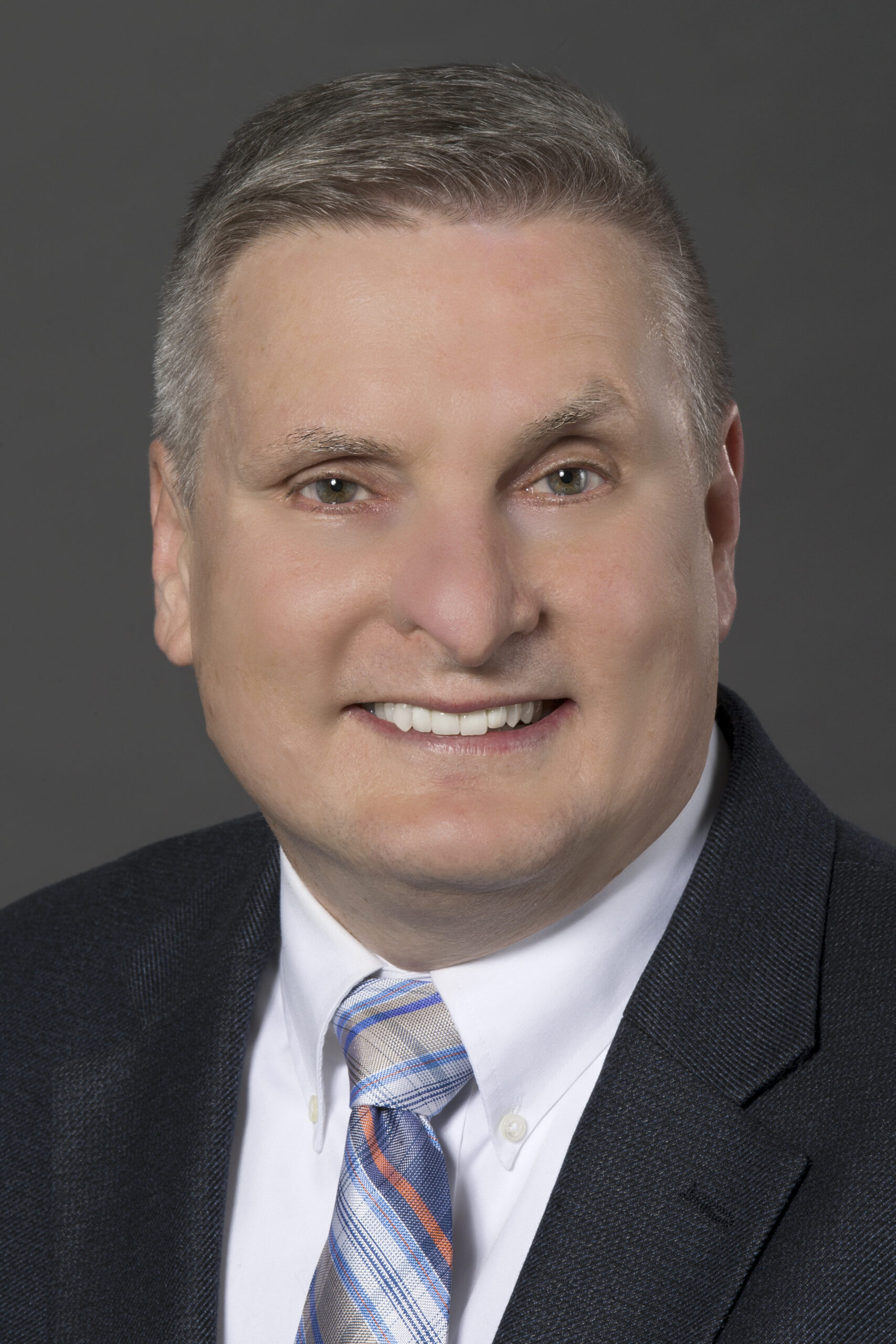
Douglas Knisely
Qualcomm
Douglas Knisely
Douglas Knisely is currently a Senior Director of Technical Standards at Qualcomm, where he divides his time among spectrum sharing, Open RAN, and other standardization activities, while championing the integration of Open Source software with industry standards. Doug has been a pioneer of Open Source stacks for Open RAN within Qualcomm and has been a leading contributor in the O-RAN Alliance since its inception. He currently focuses on 6G research and promotes Open Source Open RAN platforms through O-RAN, OAI/Duranta, and the Linux Foundation. He serves on the governing boards of LFN, the Wireless Innovation Forum (WInnForum), and OAI, and is a co-chair of the O-RAN Alliance Standards Development Task Group (SDFG), where he advocates for coordination and cooperation among all organizations in the Open RAN Open Source ecosystem.
Prior to Qualcomm, Doug worked at AT&T Bell Laboratories, AT&T Computer Systems, NCR, Lucent Technologies, and Airvana. There, he developed Unix system protocol designs, driver code, and communications architectures for early shared-memory multiprocessor systems — the precursors of today’s cloud blade servers. His work has spanned cellular technologies from IS-95 to all versions of cdma2000. Subsequently, he led seminal efforts to define standards in 3GPP2, 3GPP, and BBF for Femtocell/Small Cell protocols and management. He was also a key contributor to CBRS standards in the WInnForum and OnGo Alliance and drove the development of software licenses that have enabled numerous standards organizations to develop Open Source software as part of their normative standards.
Edward Diaz
Verizon
Edward Diaz
With over 14 years of executive leadership at Verizon, Diaz has most recently gained the experience in leading network infrastructure planning and standards, and overseeing transformational technology initiatives. I have a strong background in engineering and technical leadership, with a masters degree from Stevens Institute of Technology.
His core competencies include technology and product development, deployment, and process engineering, as well as mobile content, customer relationship management, and go-to-market strategy. I have successfully delivered mobile applications and solutions that enhance customer experience and satisfaction, and support Verizon’s business goals and vision.
Ismael Gomez
Software Radio Systems
Ismael Gomez
Ismael has over 15 years of experience in development and leadership of software defined radio projects for mobile communications systems (GSM, 3GPP UMTS and LTE), using heterogeneous platforms (Texas Instruments DSP, Xilinx FPGA, x86 and ARM). I was the lead developer of ALOE, an open-source framework for distributed and real-time execution of software-defined radio applications and is currently the lead developer of all LTE projects in SRS. Prior to founding SRS, I held research positions in Trinity College, Dublin and Universitat Politècnica de Catalunya, Barcelona, where I worked on the theoretical aspects of SDR processing, virtualization and resource sharing in Cloud-RAN and Massive Distributed MIMO.
Kuntal Chowdhury
NVIDIA
Kuntal Chowdhury
poALA futurist, serial entrepreneur, and technology executive with more than 30 years of experience, he brings a strong engineering foundation and a forward-looking perspective on deep tech. His expertise spans artificial intelligence, cloud-native platforms, multimodal sensor fusion, and advanced wireless architectures. He is currently focused on the convergence of AI and next-generation connectivity, leading work in 6G research, AI-native RAN, and network digital twins powered by NVIDIA’s accelerated computing platform. He also serves as a board member for ATIS and the AI-RAN Alliance, and chairs the AI-RAN Alliance Technical Steering Committee.
Over the course of his career, he has held leadership roles across a range of pioneering technology companies, including co-founding Altiostar and serving as VP of Product Management to help advance virtual RAN, founding BlueFusion to drive AI-based sensor fusion, and serving as SVP of AI and Analytics at Mavenir. Earlier, he held strategy and technology leadership roles at Cisco and Starent Networks, and began his career as a systems and standards engineer at Nortel and Motorola. He holds more than 100 patents and remains deeply engaged in frontier technologies including fusion energy, quantum computing, space exploration, and autonomous vehicles.

Mari Sibley
National Spectrum Consortium
Mari Sibley
Mari Silbey is Chief Program Officer for the National Spectrum Consortium (NSC) and has two decades of experience in the telecommunications industry. At NSC, she helps set organizational strategy, engages regularly with consortium members, and leads the development of programs – including technology working groups, the creation of new technology ecosystems, and the cross-pollination of NSC initiatives with other industry efforts to advance priorities laid out by NSC’s government partners. In addition to her position at NSC, she currently serves as Program Director for the Platforms for Advanced Wireless Research (PAWR) program created by the National Science Foundation. Previously, she served as Senior Director of Partnerships and Outreach at the non-profit US Ignite, and prior to 2018, she worked in the telecommunications industry for more than a decade as a journalist, editor, and analyst.
Mauro Goncalves Filho
Softbank
Mauro Goncalves Filho
In February 2025, Mauro Goncalves Filho was appointed SVP, AI-RAN of SB Telecom America Corp., a wholly owned subsidiary of SoftBank Corp. He has over 25 years of experience in management, strategic planning, and business development in the technology, media, and telecommunications (TMT) sector. Currently, he represents the company at the AI-RAN Alliance Board and the OCUDU Ecosystem Foundation Governing Body.
Mauro previously served as Senior Director at Google X and Chief Strategy Officer at Loon, an Alphabet company. He also held management roles at Telefonica Vivo and Gradus Consultants, leading global expansion efforts. He serves on the boards of Altave (computer vision) and Onovolab (innovation ecosystem), actively mentors startups at The Alchemist Accelerator and serves as a venture partner at Niu Ventures.
At SB Telecom America, he works in close collaboration with SoftBank’s Research Institute of Advanced Technology to promote the adoption of AI-RAN technologies in the U.S. He focuses on building new infrastructure and deployment models for AI-powered mobile networks, while contributing to innovation commercialization and developing next-generation societal infrastructure in partnership with global collaborators at the AI-RAN Alliance.

Pallavi Mahajan
Nokia
Pallavi Mahajan
A builder, technopreneur, and ecosystem leader at the intersection of business and technology, she has built and scaled innovations that create new markets, center customer needs, and drive sustainable growth. Her career has spanned major industry shifts across software-defined networking, high-performance computing, edge cloud platforms, and AI, with a focus on turning breakthrough technologies into real business and ecosystem impact. Today, she is focused on advancing AI and emerging technologies to shape the next wave of growth and innovation.
She has held senior leadership roles at Intel, HPE, and Juniper Networks, including as CVP & GM in Intel’s Data Center & AI Group and Networking & Edge Group, where she led AI software strategy, open-source and standards-driven innovation, enterprise and hyperscaler partnerships, and initiatives spanning AI accelerators, edge AI, vRAN, O-RAN, DPDK, and IPUs. She also led the Open Edge Platform from concept through proof of concept, and at HPE helped drive landmark supercomputing programs including Frontier, the first exascale system. An engineer at heart, she is also a proud advocate for women in technology and sports, and has been recognized among the “Women Worth Watching in Technology.”
Paul Sutton
Software Radio Systems
Paul Sutton
Founder and CEO of Software Radio Systems, provider of open software for mobile wireless networks. PhD in Telecommunications, specialising in Software Radio and Dynamic Spectrum Access.

Phil Robb
Ericsson
Phil Robb
With over 30 years in Software Engineering and 20 years in open source communities, my passion is bringing developers and companies together to leverage the significant strengths of open collaborative development while avoiding the pitfalls. These communities are often driven by competing forces of technical excellence, customer desire, and individual corporate agendas. When done right they create a rich set of digital assets that can be widely leveraged. When done wrong, it is often a waste of the participant’s time, effort, and resources. Mastering how to best navigate this new form of software development has been an overarching theme of my career.

Thomas Rondeau
US Department of War, OUSD R+E
FutureG Office
Thomas Rondeau
FutureG Office
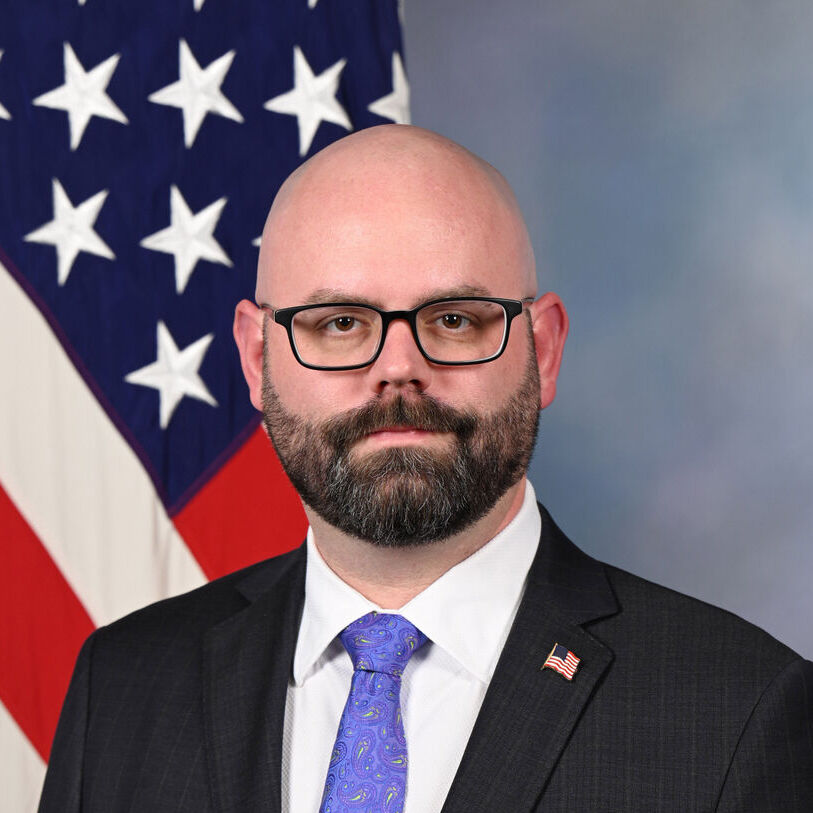
Dr. Tom Rondeau is Principal Director for FutureG in the Office of the Undersecretary of Defense for Research and Engineering at the U.S. Department of Defense, where he guides research, funding, and program execution for future-generation wireless technologies that support national security and warfighting capabilities. Previously, he spent more than six years at DARPA as a program manager, leading efforts across advanced wireless networking, software-defined radio, edge and embedded processing, and computing on encrypted data. His work there earned him the Distinguished Public Service Medal.
Before joining DARPA, Dr. Rondeau led the GNU Radio project and advised organizations worldwide on wireless communications and emerging technologies, helping grow a strong global software radio community. He has also held research roles with the University of Pennsylvania and the IDA Center for Communications Research. Dr. Rondeau holds a Ph.D. in electrical engineering from Virginia Tech, where his dissertation received the Council of Graduate Schools’ 2007 Outstanding Dissertation Award in math, science, and engineering.