
In SQL, the RIGHT JOIN (also called RIGHT OUTER JOIN) is used to combine rows from two tables based on a related column. It returns all records from the right table and only the matching records from the left table. If there is no match in the left table, the result will show NULL values for the left table’s columns.
- Returns all rows from the right table.
- Includes only matching rows from the left table.
- Non-matching rows from the left table appear as NULL.

Syntax:
SELECT column_name(s)
FROM tableA
RIGHT JOIN tableB
ON tableA.column_name = tableB.column_name;
Examples of SQL RIGHT JOIN
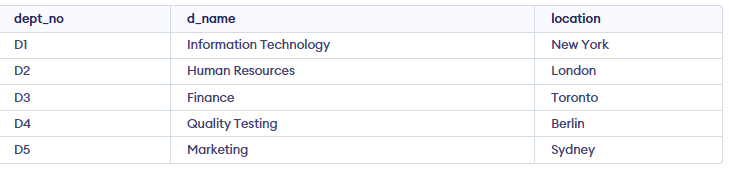
In this example, we will consider two tables employee table containing details of the employees working in the particular department the and department table containing the details of the department

Query:
SELECT emp_no , emp_name ,d_name, location
FROM employee
RIGHT  JOIN dept
ON employee.dept_no = department.dept_no;
Output:

- The RIGHT JOIN ensures that all departments are listed.
- Since D4(Testing) and D5(Marketing) have no employees, the emp_no and emp_name columns show NULL.
- Departments with employees show proper matches.
Applications of SQL RIGHT JOIN
Here are the applications of SQL RIGHT JOIN:
- Merging Data: Combines related data from different tables.
- Ensuring Completeness: Guarantees all records from the right table are included.
- Handling Missing Values: Identifies records without matches in the left table.
- Analyzing Relationships: Helps detect data gaps and dependencies across tables.