Isn't spring great? Unless you're suffering from chronic hayfever, that is. Whether the weather's dry or not (and it usually is) the longer days mean there's more time in indulge in outdoor pastimes like flying the best drones.
And if you don't have a drone or are looking to upgrade? That's where our guide comes in. With the help our experts we've picked through every major drone currently available to bring you the absolute best.
The Quick list

The DJI Mavic 4 Pro is a technological and performative upgrade on everything that's gone before it. It can achieve 6K videos, 100MP resolution still and speeds of up to 60.4MPH.

The DJI Mavic 3 Pro is the world's first consumer drone to offer three cameras, and offers the best image quality available in a consumer model, alongside professional features.

The DJI Air 3 is an impressive dual-camera drone with advanced features and functionality. This includes a 24mm equivalent camera with a 1-inch sensor and a 70mm equivalent medium telephoto camera.

If you're simply looking for the best drone with a single camera, look no further than the DJI Mavic 3 Classic with its impressive Four Thirds Hasselblad camera.

The Potensic Atom 2 is an excellently built small drone with great features and a good camera. There's a lot to like about it and we think it's the best DJI alternative.

The DJI Air 3 is an impressive dual camera drone offering a range of advanced features to provide impressive all-round performance in all areas.
Load the next 8 products ↴

The DJI Flip is a great, portable sub-250g camera drone with a price tag that won't break the bank.

The DJI Mavic Mini 3 is a small and lightweight beginner drone offering excellent image quality alongside ease of use and DJI reliability at an affordable price.

The DJI Avata 2 is incredibly easy to fly and offers excellent 4K video capture. Whether you're an FPV beginner or an experienced pilot, the DJI Avata 2 is a fantastic FPV drone.

The DJI Mini 4K is the least expensive model in the DJI line-up, offering beginners solid performance alongside impressive image quality for a drone of this level.

The Emax Tinyhawk III Plus Freestyle RTF Kit is the best traditional FPV drone kit we've tested with excellent performance and an HD VTX for a clear FPV feed to the goggles.

This sub-250 g 360-degree drone's FPV goggles make for an immersive flight experience, and it's easy to use to boot.

The DJI Mini 5 Pro is a serious step-up from its predecessors and features a 50MP, 1-inch sensor along with a large video transmission range, multiple flight modes and several useful features.

Inexpensive, lightweight and easy to use, the DJI Ryze Tello is an option worth considering for beginners, children and safe indoor flights.

Inexpensive, easy to use and a notable step-up from its predecessor, the DJI Neo 2 is the best drone for simplicity.

With smart tracking modes, excellent automated flight modes and up to 8K video, this is a seriously well-equipped selfie drone.
Best drones we recommend in 2026
Why you can trust Space.com Our expert reviewers spend hours testing and comparing products and services so you can choose the best for you. Find out more about how we test and review products.
Best drone overall


✅You want the best: Don't over-complicate things. If you want the best drone available, this is it.
✅Price is no object: While you do get value for what you spend, there's no hiding that this isn't a budget-friendly model.
❌You're on a budget: While this is value, it does cost a pretty penny and there are plenty of more-than-capable options available at a far lower price point.
🔎DJI Mavic 4 Pro: It's a technological a upgrade that performs better than anything that has come before it. It can capture stills of resolutions up to 100MP, video up to 6K, achieve speeds of up to 60mph and it's stacked with useful features.
If you want the best drone overall then look no further as the DJI Mavic 4 Pro seriously impressed us in our DJI Mavic 4 Pro review. It's stacked full of top features like a fully rotating camera, Return To Home that doesn't require GPS and video and stills of 6K and 100MP, respectively. It's an upgrade in every way on the previous Mavic 3 Pro.
If you're looking for a camera drone, this is pretty special as it features three cameras. The main camera is a Four Thirds Hasselblad which features a 28mm equivalent focal length and an adjustable f/2.0-f/11 aperture. There's also a 70mm equivalent camera with a 48MP/12MP 1/1.3-inch sensor and the 168mm equivalent camera uses a 50MP/12.5MP 1/1.5 in. sensor. In short, it can take stills in a resolution of up to 100MP and it can capture video in 6K up to 30FPS, 4K up to 120FPS.
Its design is pretty handy too. While it is heavier than the Mavic 3, it does fold effectively, meaning you can transport it easily. The battery also lasts for 51 minutes of flight time, although we found it's more like 37 minutes when capturing footage. It also comes with a new DJI RC 2 smart controller which features a 2000-nit 7-inch high-bright Mini-LED display.
The Mavic 4 Pro also includes a host of handy features. The Return To Home now doesn't require GPS, it can achieve speeds of up to 60.4mph in sports mode and it can track targets moving up to 40.3. It also has a normal and a cine mode as well as improved obstacle sensing and collision avoidance. It will resist winds of up to 26.8mph when hovering too.
Overall, The DJI Mavic 4 Pro is a cut above the Mavic Pro 3 and everything else the market has to offer. It's well suited for professional use with its superb camera capabilities and the range of useful features on offer. It's also surprisingly easy to use, meaning those without much experience can get to grips with it too. We think this is the best drone overall available today.
- Read our full DJi Mavic 4 Pro review.
Design | An excellent folding design with complete camera rotation. |
Functionality | Improved Return To Home, obstacle avoidance and subject tracking |
Performance | 6K video, 100MP resolution stills, 51-minute battery life and a 60.4mph top speed |
Best last gen drone
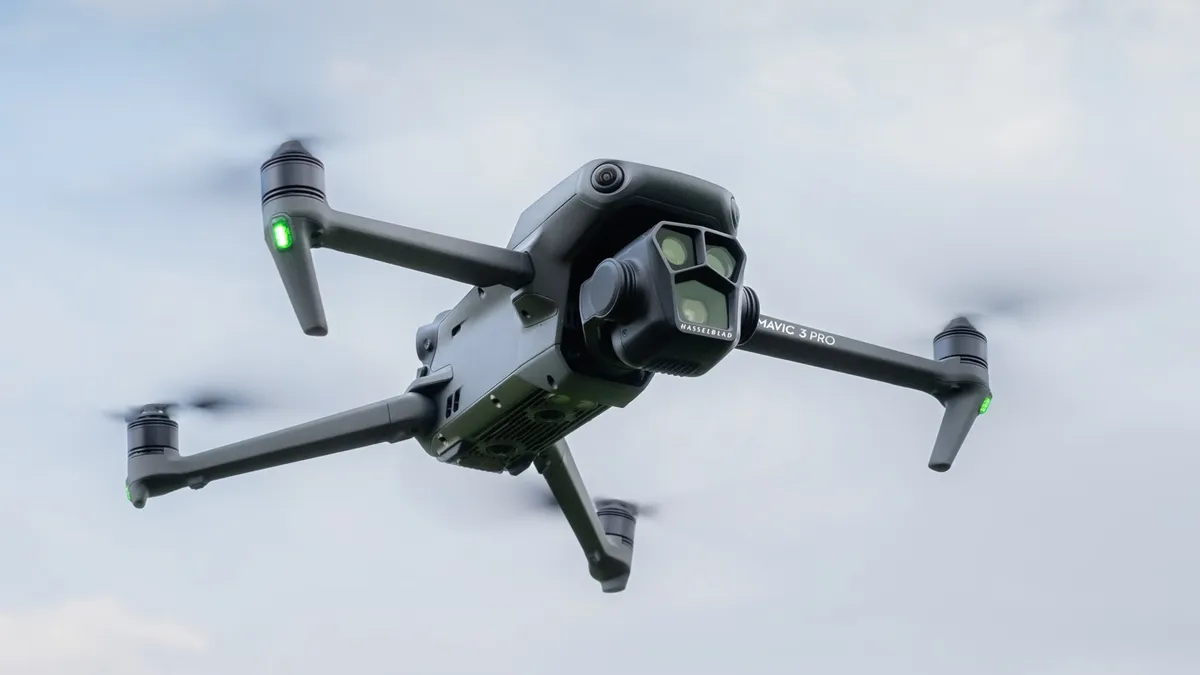


✅ You're looking for versatility: The three cameras on offer on this drone give you the ability to shoot different perspectives and different focal lengths at the same time, which can help produce more creative content.
✅ You want to shoot high-quality slow-mo: With this drone, you don't have to choose between quality and frame rates. You can shoot 5.1K up to 75fps, 4K up to 120fps and FHD up to 200fps.
❌ You're on a budget: With all the features on offer, this is quite an expensive drone and may be overkill for casual hobbyists.
🔎 DJI Mavic 3 Pro One of the best foldable drones on the market, this allows you to get stunning videos and offers great flexibility with three cameras that can film at the same time. The only real downside is the price, but we think beginners and pros would be pleased with this purchase. ★★★★★
While the DJI Mavic 4 Pro may have surpassed this predecessor, the Mavic 3 Pro could be the drone for you if you like an all-rounder with features, functionality and camera performance that will suit the requirements of most pilots. With three cameras, you're spoilt for creative choice and although this is a prosumer drone, it's a great option for beginners, too. Check out our DJI Mavic 3 Pro review, where you can discover more about this impressive model.
It features a 24mm Four Thirds Hasselblad camera which captures images at 20MP. Its aperture is adjustable from f/2.8 and f/11, suitable for a wide range of situations and photographic effects, and you can also record video up to 5.1K. On either side of the Hasselblad, you'll find a 70mm medium telephoto camera and a 166mm telephoto, having a wide range of zoom lengths covered.
It features the hallmark Mavic folding design, and like the other models, we found it could provide around 30 minutes of flight time. It also comes with two different smart controller options, both featuring 5.5-inch touchscreens, so there's no need to hook up your smartphone.
The Mavic 3 Pro is very intuitive and easy to fly for a drone of this class since it comes with a number of flight and safety features such as Advanced Return to Home, AirSense ADS-B to detect aircraft, GEO 2.0 geofencing, obstacle sensing and automated flight patterns for video.
This is a high-end drone with many possible applications for both professionals and enthusiasts. It's certainly not an inexpensive drone, but you're paying for the best available and it's priced similarly to older models at launch which is fair. So, if you're looking for a powerful and feature-packed drone with fantastic cameras, the DJI Mavic 3 Pro is the one for you.
- Read our full DJi Mavic 3 Pro review.
Attributes | Notes |
|---|---|
Design | Three cameras and two smart controllers |
Functionality | Easy to fly, with obstacle sensing technology |
Performance | Excellent image quality and videos up to 5.1K |
Best mid-size drone
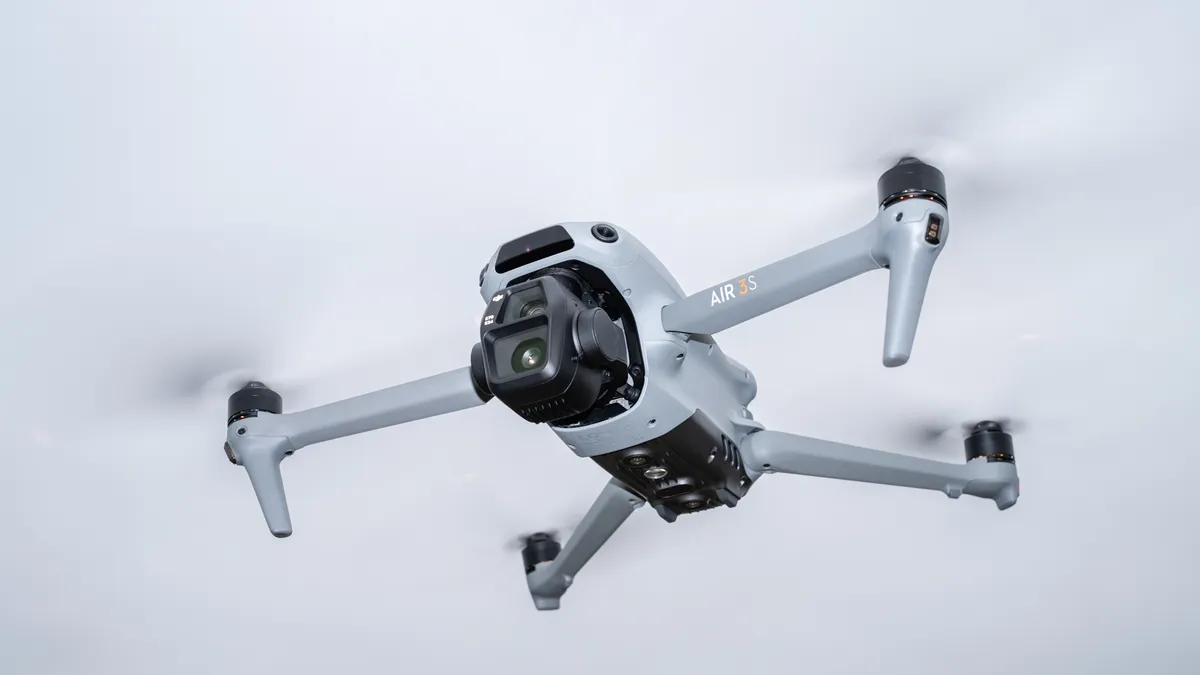


✅ You desire excellent image quality: The image quality produced by the two cameras is excellent, and the main wide-angle camera with the 1-inch sensor is impressive.
✅ You require advanced collision avoidance: Collision avoidance is an incredibly useful feature when flying in complex environments. This also assists with advanced Return to Home and subject tracking.
❌ You'd prefer a regulator-friendly drone: With the weight of the Air 3S it's more regulated in the US, UK and other regions so for simplicity, a sub-250 g model may be more suitable for you.
🔎 The DJI Air 3S is a dual-camera drone providing excellent image quality across wide-angle and telephoto focal lengths. It also offers impressive features including advanced collision avoidance, advanced Return to Home and impressive subject tracking performance. ★★★★½
The DJI Air 3S is a folding medium-sized drone that sits between the sub-250 g DJI Mini 4 Pro and DJI Mavic 3 Pro in terms of price and camera functionality, but it also manages to overtake the higher-end model with some useful new features. It's a fantastic drone overall and it's fair to say that it's one of the best available thanks to its features and impressive dual camera.
The Air 3S features a 50MP 1-inch CMOS in the 24mm equivalent main camera, while the 70mm equivalent medium telephoto uses a 48MP 1/1.3-inch CMOS. As we stated in our DJI Air 3S review, they provide a huge amount of versatility and image quality is excellent overall with the larger sensor naturally being the most impressive of the two.
Video can be captured in flat color profiles for color grading and a larger dynamic range, as well as the standard profile for straight-out-of-camera footage. Video can be captured up to 4K 120 FPS, 1080p up to 240 FPS and 2.7 vertical video up to 60 FPS. Photos can be captured in Raw and JPEG at 12MP and the full resolution of each sensor.
The Air 3S also features advanced collision avoidance, including forward-facing LiDAR for night flying, impressive subject tracking, Off-state Quick Transfer and it can be connected to 4G using the DJI Cellular Dongle 2 and a SIM card for more secure and reliable connectivity in complex environments.
- Read our full DJI Air 3S review.
Attributes | Notes |
|---|---|
Design | Two impressive cameras and a folding design. |
Functionality | Excellent all round features. |
Performance | Image quality from both cameras is fantastic. |
Best single camera drone


✅ You want excellent image quality at a more affordable price: This drone contains the same impressive Hasselblad 20MP camera as the other DJI Mavic 3 models, but keeps the price down by doing away with the additional cameras.
✅ You want something easy to fly: With two different controller options and an Advanced Return to Home feature, you should be able to get the hang of this drone quite quickly.
❌ You're after an affordable beginner drone: While this is more affordable than the other DJI Mavic 3 drones, it's still quite pricey and there are several other cheaper options on the market for beginners.
🔎 DJI Mavic 3 Classic This is a great option for people who want the image quality of the DJI Mavic 3 drones without paying extra for additional cameras that they don't have need for. Although it's still not cheap, it's easy to fly and would make a good investment for keen beginners. ★★★★½
The DJI Mavic 3 Classic features only the impressive 24mm equivalent lens, adjustable aperture and Four Thirds sensor to offer excellent image quality for photos and videos. Many drone pilots only require a wide-angle camera, so the Mavic 3 Classic meets this need while delivering flagship performance for a lower cost.
The camera on here is the excellent 24mm Hasselblad camera, capable of capturing 20MP stills or 5.1K video, so you're getting the best-of-the-best in terms of image quality. You can shoot in either JPEG or Raw, adjust the aperture between f/2.8 and f/11 and make use of a 3x digital zoom.
There are two controller options with this drone, depending on your budget. You can opt for a controller with a retractable phone holder or pay a bit more to get a smart controller with a 5.5-inch touchscreen, which in our DJI Mavic 3 Classic review, we found improved the overall user experience. This drone has the typical foldable design of the Mavic range and flight time was around 30 minutes during our testing.
Even beginners will be able to get the hang of flying this drone quickly, thanks to all the onboard flight assistance. The Mavic 3 Classic features Advanced Return to Home, obstacle avoidance using multiple vision sensors and the highly effective ActiveTrack 5.0 for subject tracking. The High-Speed Quick Transfer feature also makes it super easy to share your results with clients or on social media since you can transfer files to your smartphone over WiFi at a rate of 80MB/s.
If you don't need a second or third camera, you can make a decent saving on this drone in comparison to the other Mavic 3 drones without losing many of their other great features and functionality. What's more, the camera on offer is the best available on any consumer drone.
- Read our full DJI Mavic 3 Classic review.
Attributes | Notes |
|---|---|
Design | Single Hasselblad 20MP camera and controller options |
Functionality | Easy to fly, with good safety features |
Performance | Fantastic image quality with 12.8 stops of dynamic range |
Best non-DJI alternative


✅ You're looking for value for money: This drone is very well made and boasts some impressive features and a good camera, all for a comparatively affordable price.
❌ You want a larger and more powerful drone: While the Potensic Atom 2 packs a punch, there are larger, more powerful and more advanced drones available.
🔎 Autel Evo Lite+ This drone is a fantastic sub-250g drone with plenty of useful features, a very well-made design and a good camera. Yes, there are some caveats, but no dealbreakers and it offers great value for money. ★★★★
New for 2025, the Potensic Atom 2 is an affordable entry point into the world of drones for those looking for genuine quality. We think it's the best DJI alternative on the market as it boasts plenty of performance and fortunately, you don't have to break the bank to have one.
DJI is a market leader in the drone industry, but not everyone will want to own one of their models. This can be due to any number of reasons, one of which can be cost. So, a retail price starting at $330 for a standard kit can seem attractive to those looking for a mid-range drone that performs well. After all, the Potensic Atom 2 does boast features and specs that seriously impress.
The drone features a 12/48MP Sony 1/2 in CMOS sensor, which means it can capture images with 48MP or up to 8K. The caveat is that those images are only in JPEG format. It will also capture video in 4K up to 30FPS, so there's more than enough quality on show.
You'll also find some handy features in this drone, like Return to Home and Steady Hover. Sport mode will enable speeds of over 35mph and a level 5 wind resistance means oncoming winds of around 23mph shouldn't affect the drone's positioning. The gimbal tilt is smooth and users will have the ability to shoot time-lapse and slow-mo video, as well as make the most of AI subject tracking and quickshots.
Overall, we think the Potensic Atom 2 is a great drone and great value for money. Sure, there are more premium options available but this will do a lot of the things you want, is very well made and competes with the best mid-range options on the market. New for 2025, it's certainly a DJI alternative to consider.
- Read our full Autel Evo Lite+ review
Attributes | Notes |
|---|---|
Design | High-quality folding design with 12/48MP Sony 1/2 in CMOS sensor |
Functionality | Level 5 wind resistance, subject tracking and Return to Home |
Performance | Excellent image quality with up to 4K video |
Best professional mini drone


✅ You want a regulator-friendly drone: Sun-250g drones are subject to fewer restrictions than larger drones, which means they’re able to be flown with less fuss.
✅ You need a fully featured sub-250g drone: The DJI Mini 4 Pro offers features comparable to the flagship DJI Mavic 3 prosumer models making it the best sub-250g drone by far.
❌ You need higher wind resistance: The Mini 4 Pro can handle reasonably strong wind, but the larger and more powerful DJI Air 3 and Mavic 3 models are much more adept in stronger winds.
❌ You need dual cameras: The Mini 4 Pro has one excellent camera offering an equivalent focal length of 24mm, but the DJI Air 3 offers dual 24mm and 70mm cameras for added versatility.
🔎 The DJI Mini 4 Pro is the best sub-250g drone to date, offering advanced pro-spec features and excellent image quality. Plus, not only is it perfect for professionals, it’s a great option for beginners, too.★★★★½
Sub-250 g drones are incredibly popular due to their small size and light weight, not to mention that they're regulator-friendly in most regions. And with the DJI Mini 4 Pro, you get some seriously impressive features and functionality that's more commonly seen on DJI's flagship models. We were hugely impressed in our hands-on DJI Mini 4 Pro review, where this small but fully featured drone is a firm favourite.
Advanced features include Omnidirectional Obstacle Avoidance, improved subject tracking, Advanced Return to Home, and several video upgrades. The drone is easy to set up and fly, which is great for beginners and experienced pilots, while the Mini 4 Pro is a smooth and responsive flier. The image sensor and camera are the same as the Mini 3 / Mini 3 Pro, so image quality is similar, although image processing is claimed to have been improved.
Image quality produced by the 48MP 1/1.3-inch sensor is fantastic given the small size of the sensor, and high ISO handling is outstanding. The lens produces an equivalent focal length of 24mm and the fixed f/1.7 aperture is fantastic for low-light shooting but still captures a large depth-of-field. One of the most useful aspects of the camera is that it can be rotated 90 degrees to allow users to switch between landscape and portrait-oriented photos and video.
Photos can be captured in both Raw and JPEG formats, while with video, you can capture in both standard and flat color profiles, and if you're shooting slow motion, you can shoot up to 4K. Overall, we think this is an excellent drone for users who don't quite want to pay top prices but want a seriously compact piece of equipment with pro-spec features.
- Read our full DJI Mini 4 Pro review
Attributes | Notes |
|---|---|
Design | Under 250g with a 12/48MP camera |
Functionality | Smart controller, omnidirectional obstacle avoidance and advanced subject tracking |
Performance | Shoots high-quality photos and videos in both portrait and landscape formats |
Best portable camera drone


✅ You're a beginner looking to get into drone flying: The DJI Flip is super accessible and is easy to get to grips with.
✅ You want intelligent, hands-off flight: The DJI Flip boasts multiple subject tracking and autonomous flight modes.
❌ You need top-tier image quality: While the DJI Mini's image quality is okay, you can better.
🔎 DJI Flip As beginner-level drones go, the DJI Flip is well worth picking up. It's easy to get to grips with, has solid if not amazing image quality, and boasts several hands-off flight modes. ★★★★
The DJI Flip is an excellent option for new drone fliers and is easy to pick up and pilot. It also boasts a host of autonomous modes if you're looking to capture your activities.
With a 12MP/48MP 1/1.3-inch sensor, it offers good image capture; you can get better, but it's still fine for this price-band. In our review of the DJI Flip, we remarked that it "Sets a new direction for beginner models thanks to its versatility", combining its social media friendly features with its usefuless as a camera drone.
Our one gripe is that it's not great in windy conditions, so be warned. But this is still a superb sub-250g camera drone, punching above it weight in terms of features and ease of use.
- Read our full DJI Flip review
Attributes | Notes |
|---|---|
Design | Folding design, multiple controller options |
Functionality | 2GB internal storage, AI subject tracking |
Performance | 12MP sensor, 4K 60 FPS video, good but not amazing image quality |
Best drone for beginners
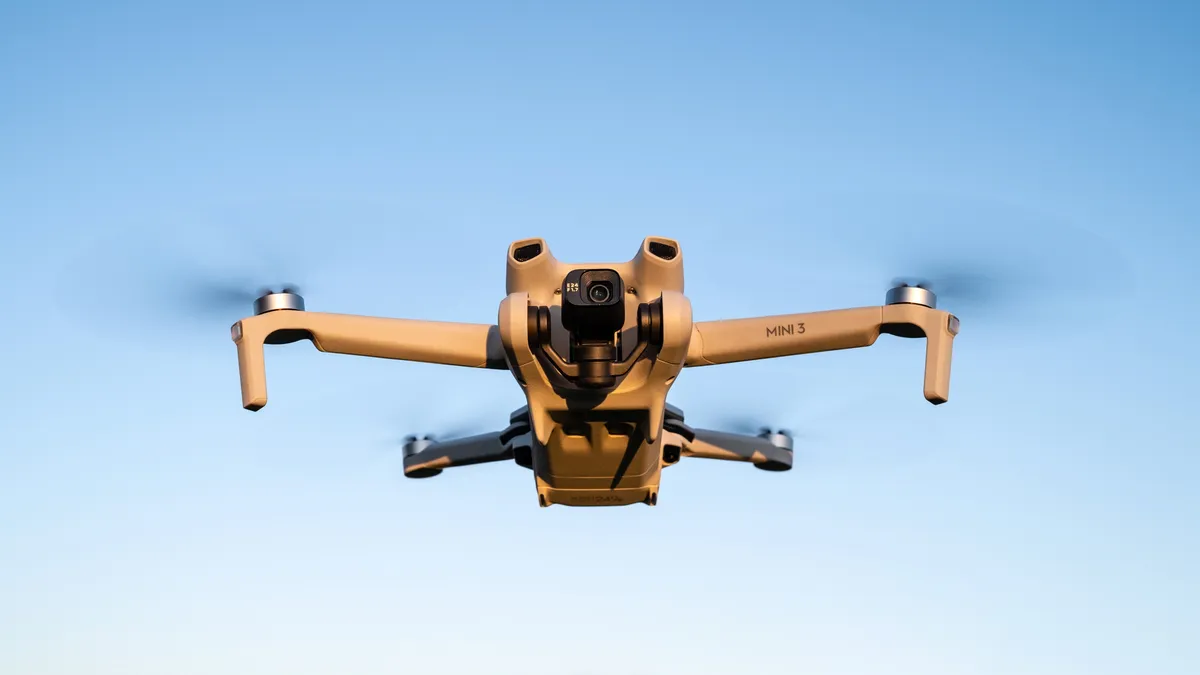


✅ You're looking for a more affordable beginner option: If your budget can't quite stretch to the DJI Mini 3 Pro, then the DJI Mini 3 is a great option and comes with the same high-quality camera on board.
❌ You want more advanced flying features: To save money, this drone doesn't come with obstacle avoidance or subject tracking, so you'll need to be very careful not to let it bump into things when flying it.
🔎 DJI Mini 3 With the same excellent camera on board, this is a great alternative to the DJI Mini 3 Pro for those on a tighter budget who want a more accessible beginner model. The only catches are that it doesn't come with obstacle avoidance or subject tracking and the 4K video tops out at 30fps. ★★★★
If the DJI Mini 4 Pro is out of your price range, the DJI Mini 3 is the next best option and even uses the same sensor. This means that image quality is almost identical, which is great news for pilots on a budget.
The DJI Mini 3 isn't an entry-level DJI mini model, like the DJI Mini 4K, but it is the more basic option of the higher-end Mini models when compared to the DJI Mini 4 Pro. Video capture is more basic and the Mini 3 doesn't offer collision avoidance. That said, it's still an impressive drone for the price.
The camera provides an equivalent focal length of 24mm, which is wide-angle and an ideal focal length for aerial photography and video. This is backed up by a 1/1.3-inch 12MP sensor and fixed f/1.7 aperture.
The camera also rotates 90° to shoot photos and videos in both landscape and portrait formats, which is a most welcome feature for photographers and those creating aerial videos for social media.
In our DJI Mini 3 review, we found the ISO handling to be excellent throughout the full range of ISO 100-3200. Photos can be captured in both Raw and JPEG formats. Video can be captured up to 4K at 30 fps in the Normal color profile.
So, while not as good as the Pro 4, which can shoot in the flat D-Log M color profile for color grading and professional workflows, it's ideal for beginners and intermediate users.
- Read our full DJI Mini 3 review
Attributes | Notes |
|---|---|
Design | Excellent 12.1MP camera with 1/1.3-inch sensor |
Functionality | More basic, with no collision avoidance or subject tracking |
Performance | Films in portrait or landscape, but only 30fps at 4K |
Best FPV drone


✅ You want an easy FPV drone: With the incredibly intuitive Motion Controller, anyone can enjoy easy and immersive FPV flight.
✅ You would like to capture FPV video: FPV looks amazing because it provides the viewer with an almost bird’s eye perspective.
❌ You want to capture photos: While the Avata 2 can capture photos in JPEG format, it’s extremely limited in this capacity. A camera drone is much better for this.
❌ You don’t like FPV goggles: Not everyone gets on the FPV goggles and some people can suffer from motion sickness using them.
🔎 DJI Avata The DJI Avata 2 is DJI’s best FPV drone to date, with the ability to be used by beginners or expert FPV pilots to capture great quality and immersive 4K video. The Motion Controller 3 is a breeze to use and the DJI Goggles 3 provide a crystal clear FPV feed.★★★★½
FPV drones are traditionally difficult to fly, albeit the most exhilarating once you've gotten to grips with manual control. DJI has turned this tradition on its head with its FPV drones and the DJI Avata 2 is an FPV drone that can be flown competently by both absolute beginners and experienced FPV pilots looking for peak performance.
For beginners, the DJI Motion 3 Controller is incredibly intuitive and makes FPV flight as easy as playing a computer game. All that's required is for the pilot to pull the trigger to fly forward while tilting the controller forward or backward to ascend and descend. Turning is achieved simply by tilting the controller to the left or right. Plus, GPS positioning holds the drone in a hover when the trigger is released.
For more advanced pilots, the drone can be flown in Acro mode using the DJI FPV Remote Controller 3 but this is for experts because, as we found out in our DJI Avata 2 review, the drone can be crashed extremely easily. Whether you're a beginner or an expert pilot, you'll enjoy the new DJI Goggles 3 which provides a clear and crisp 1080p 60fps feed of the FPV camera using DJI 04 Video Transmission.
The FPV camera of the Avata 2 can capture 4K 60fps video, and if you're happy to reduce the resolution of 1080p, you can get frame rates of up to 120fps. Different color profiles are available, including Normal for straight-out-of-camera footage and D-Log M flat profile if you want more advanced post-processing options and color grading. We've found the video quality to be fantastic here and there's no reason you can't use the camera here to capture video alone — but some FPV pilots prefer to attach action cameras to the drone instead.
- Read our full DJI Avata 2 review
Attributes | Notes |
|---|---|
Design | Easy to fly with beginner-friendly Motion Controller |
Functionality | Great video feed via DJI Goggles 3 |
Performance | Excellent video quality with immersive results |
Best dual camera drone


✅ You need two focal lengths: With cameras offering 24mm and 70mm equivalent focal lengths, this versatile drone can be used to capture a range of subjects.
✅ You need a balanced drone: The Air 3 sits between the Mini 4 Pro and the Mavic 3 Pro, offering similar features and functionality but is lighter than the Mavic with more powerful than the Mini.
❌ You need an adjustable aperture: This drone has two cameras with fixed apertures, so if you'd prefer a model with an adjustable aperture for video, take a look at the Mavic 3 Classic and Mavic 3 Pro.
❌ You need a small and lightweight drone: If you'd prefer an easy-to-carry sub-250g drone with similar features to the Air 3, take a look at the DJI Mini 4 Pro.
🔎 The DJI Air 3 is an impressive drone overall and one that can suit the needs of both beginners and professionals. It's a feature-packed model with advanced functionality including omnidirectional obstacle avoidance and excellent image quality from the dual cameras. ★★★★1/2
With a power to weight ratio that makes flying in stronger wind than sub-250 g drones, the DJI Air 3 is an impressive performer pilots will undoubtedly enjoy. This drone features two cameras with focal lengths equivalent to 24mm and 70mm. Each of these is backed up by the same sensor found in the impressive DJI Mini 3 and Mini 4 Pro.
You can shoot vertically using in-camera digital cropping, capture photos at 48MP, shoot slow-motion video at 4K and capture video in standard and flat color profiles. That's an impressive suite of features, and users will appreciate the flexibility of the focal lengths on offer to provide creative flexibility in a wide range of aerial situations.
The Air 3 is a medium-sized model that sits between the DJI Mini 4 Pro and the DJI Mavic 3 Pro, with all three offering similar flight features. It's larger and more powerful than the former, with a maximum wind resistance of 27mph, and is slightly smaller and lighter than the latter, with a weight of 25.4oz / 720g.
The advantage of medium-sized drones like this is that they're more powerful than sub-250 g models and also have a higher wind resistance. This opens up creative possibilities on more conditions, but this does mean that it's not as regulator-friendly. The batteries are also of higher capacity, which means longer flight times.
Alongside precise GPS positioning, the Air 3 offers omnidirectional collision avoidance and advanced return to home, which in our DJI Air 3 review, we found incredibly useful. This is on top of incredibly easy-to-use flight controls, stable flight performance, advanced subject tracking functionality and to top it all off, excellent image quality for both photos and videos from both of the cameras.
- Read our full DJI Air 3 review
Attributes | Notes |
|---|---|
Design | Mid-sized drone with a folding design |
Functionality | Impressive object tracking and omnidirectional obstacle avoidance |
Performance | Excellent dual 24mm and 70mm cameras. |
Best entry-level drone


✅ You’re on a budget: With most of the features you could need as a beginner, the DJI Mini 4K comes in at a fantastic price making it the most affordable DJI drone available.
✅ You only need a basic drone: The Mini 4K has all the features you need to capture aerial photos and videos, so if you don’t need all the bells and whistles it's an obvious choice.
❌ You want a better camera: The Mini 4K camera produces great image quality, but the DJI Mini 3, DJI Air 3 and the DJI Mavic 3 Pro are leagues ahead in this department.
❌ You would like more features: This is a basic model that can shoot 4K video and photos in JPEG and RAW, but more expensive models naturally offer a wider variety of features.
🔎 The DJI Mini 4K is a fantastic drone for the price, making it a great budget option. Its flight performance can't be faulted and image quality for photos and videos is impressive given the small sensor size. ★★★★★
Nipping at the heels of, and in many cases overtaking, all inexpensive beginner drones, the DJI Mini 4K is a beginner pilot's dream. This is DJI's most inexpensive sub-250 g drone and is capable of capturing great quality video in 4K up to 30 FPS, 2.7K up to 30 FPS and 1080p up to 60 FPS. Photo capture is also available in both JPEG and RAW formats.
This palm-sized drone weighs just 8.7 oz / 249 g, which means that US pilots won’t have to register with the FAA or use Remote ID if using the drone for recreational purposes. UK pilots will, however, still have to register as operators with the CAA. Take a look at our full review of the DJI Mini 4K to learn more about this impressive entry-level model.
Despite its small size and light weight, the Mini 4K offers Level 5 wind resistance which equates to up to 24 mph, and is impressive for an entry-level drone. Flight times typically average around 21 minutes before Return to Home is initiated when the battery reaches 20%. It's far from the best flight time, so we recommend investing in the Fly More Bundle, which includes three batteries.
Unsurprisingl,y given the size of the DJI Mini 4K, the image sensor on board is pretty small; it's a 12MP 1/2.3-inch CMOS sensor, but despite its small size size we found the image quality to be impressive and perfectly acceptable for beginners.
12MP isn't huge in terms of resolution but it's still enough to be able to print photos to around A3 if you wish. Video isn't affected by the resolution since 4K is only around 8MP and uses less of the sensor for the 16:9 ratio. What's more, photos can be enlarged in Adobe Lightroom the Super Resolution feature to increase file sizes by 4x.
There are several noteworthy camera features here, including automatic exposure bracketing and a built-in panorama function, which photography enthusiasts will no doubt appreciate. There are also automated flight patterns - Quickshots - which will allow you to capture professional-looking videos at the touch of a button: the perfect tool for a beginner.
- Read our full DJI Mini 4K review
Attributes | Notes |
|---|---|
Design | A small and lightweight sub-250 g model with a folding design. |
Functionality | features are basic but there are enough for beginners. |
Performance | Image quality is great considering the small sensor. |
Best FPV drone kit


✅ You would like to learn how to fly FPV freestyle: This kit is designed specifically for beginners and for performing aerial stunts such as rolls, flips and dives.
✅ You want a digital FPV drone: Most traditional FPV drone kits use an analogue VTX (FPV feed), but the Tinyhawk III Plus Freestyle uses the digital HDZero system.
❌ You would like hover functionality: If you'd like camera drone functionality such as hovering and Return to Home, the Avata 2 is an FPV drone that can do both.
❌ You need 4K video capture: This drone only captures unstabilized 720p goggle footage and is too small to carry an action camera, so if you need 4K video consider the DJI Avata 2.
🔎 The Emax Tinyhawk III Plus Freestyle RTF Kit is fun to fly, offering beginners a progressive approach to FPV flight. It's tough and is highly capable considering its small size. ★★★★★
The Emax Tinyhawk III Plus Freestyle Kit is arguably the best traditional ready-to-fly (RTF) drone kit for FPV beginners. It's even a great little kit for more experienced pilots looking for some quick and easy FPV fun. What makes it ideal for beginners is that not only is it extremely tough, but it's tuned for freestyle flying with variable power options available.
Take a look at our full Emax Tinyhawk III Plus Freestyle Kit review where we gave this impressive drone a top rating. The kit includes everything you need to get started, so out of the box, you're ready to fly once everything is charged. Plus, the digital FPV feed provides a clear and higher-resolution goggle feed.
Being a freestyle FPV drone, the Tinyhawk III Plus sports a lightweight X-shaped airframe with exposed propellers and electronics that are exposed on the sides. The HDZero camera sits slightly recessed at the front of the drone, while the single 1S or two 1S batteries are attached to the top with a Velcro strap.
The goggles included here, the Transporter 2 HD FPV goggles, are capable of displaying a 1080p on-screen image and can capture 720p 60 FPS video. If video is your main focus, you'll likely want to find something capable of capturing at a higher resolution, but for beginners, it's a good place to start. It's easy to capture too, with the goggles having a built-in DVR that can take a microSD card up to 64GB.
- Read our full Tinyhawk III Plus Freestyle review
Attributes | Notes |
|---|---|
Design | X-shaped freestyle FPV design in miniature. |
Functionality | Standard basic FPV drone, but the camera is digital. |
Performance | A huge amount of fun with a clear and crisp FPV feed to the goggles. |
Best premium FPV drone


✅ You want an easy to use FPV drone: The antigravity A1
✅ You would like to capture FPV video: FPV looks amazing because it provides the viewer with an almost bird’s eye perspective.
❌ You want to race: Compared to the DJI FPV, our previous pick, now unavailable, this is less of a racing drone.
🔎 Antigravity A1:.★★★★
While it may not be as racing-focused as some models, this is a superb FPV drone which boasts a full 360 degree goggle view for that Superman experience. And, when you're recording such a view, the A1 renders itself out of view.
In our review of the Antigravity A1, we praised just how easy it was to use, and its fantastic design and features, which include advanced collision-avoidance features. It helps to have a spotter, but you're unlikely to wreck your A1 while enjoying its impressive image quality.
Still images aside, it can handle up to 8K video, and even without the FPV view, its motion controller is a joy to use and it has a respectable 40 minute light time. It's not the cheapest sub-250g drone around but you absolutely get what you pay for.
- Read our full Antigravity A1 review
Attributes | Notes |
|---|---|
Design | Easy to fly for beginners, FPV goggles for 360 view |
Functionality | Great flight performance, subject tracking, automated modes |
Performance | Great quality duak cameras, up to 8K video |
Best sub 250g camera drone


✅You want quality but don't want to register your drone: The DJI Mini 5 Pro offers a 50MP, 1-inch sensor, plenty of transmission range, several modes, features and a decent battery life. Weighing in at 249g, you won't have to register it with the relevant authorities.
❌You're on a strict budget: While this drone is a reasonable price for what it offers, and there are far more expensive options in this guide, there are more-than-good-enough camera drones and sub-250g drones out there with a smaller price tag.
🔎 DJI Mini 5 Pro offers great value for money with plenty of quality, if your budget can stretch far enough for it. Its 1-inch sensor provides high-quality imagery and features like Omnidirectional Vision Sensing, Camera Rotation and ActiveTrack are great.
The DJI Mini 5 Pro is a drone that offers everything you could want in a drone that weighs less than 250g. It provides stunning imagery, multiple flight modes, and user-friendly features to appease both beginners and serious flyers, offering great value for money. It's also a serious step up from its predecessors in the Mini range.
Firstly, its 1-inch CMOS sensor sits within a camera with a 24mm focal length and a fixed f/1.8 aperture, which allows you to choose between 12MP and 50MP modes. Images can be taken in both RAW and JPEG formats, while videos can be taken from 8-bit to 4K, 4K is available up to 120FPS, which is impressive.
Its modes and features are impressive, too. While flying, you can choose from cine, normal and sports modes, meaning you can prioritize camera or flight performance, or find a balance. You can also take advantage of a rotating camera, 360-degree subject tracking and Omnidirectional Obstacle Sensing. You can also take advantage of automated flight patterns and an advanced Return to Home feature. The obstacle sensing is done through binocular lenses and an infrared sensor attached to the bottom of the drone and the automated flight patterns allow you to video with Mastershots, Quickshots and a free panorama.
You may find it difficult to get this drone if you're from the U.S., as the ongoing tariff situation has limited DJI's reach in the U.S. for a while now. But, at the time of its release, this drone would set you back £689, which isn't cheap, but you are getting a lot of drone, despite its size, for your money. Fly More bundles cost between £869 and £979. Despite the rise in cost, they do provide good value, so we recommend them if your budget stretches far enough.
Design | sub-250g with a foldable design, 1-inch sensor |
Functionality | Omnidirectional sensing, rotating camera, subject tracking |
Performance | Excellent image quality, 50MP 1-inch sensor, 24mm f/1.8 camera |
Best drone for children
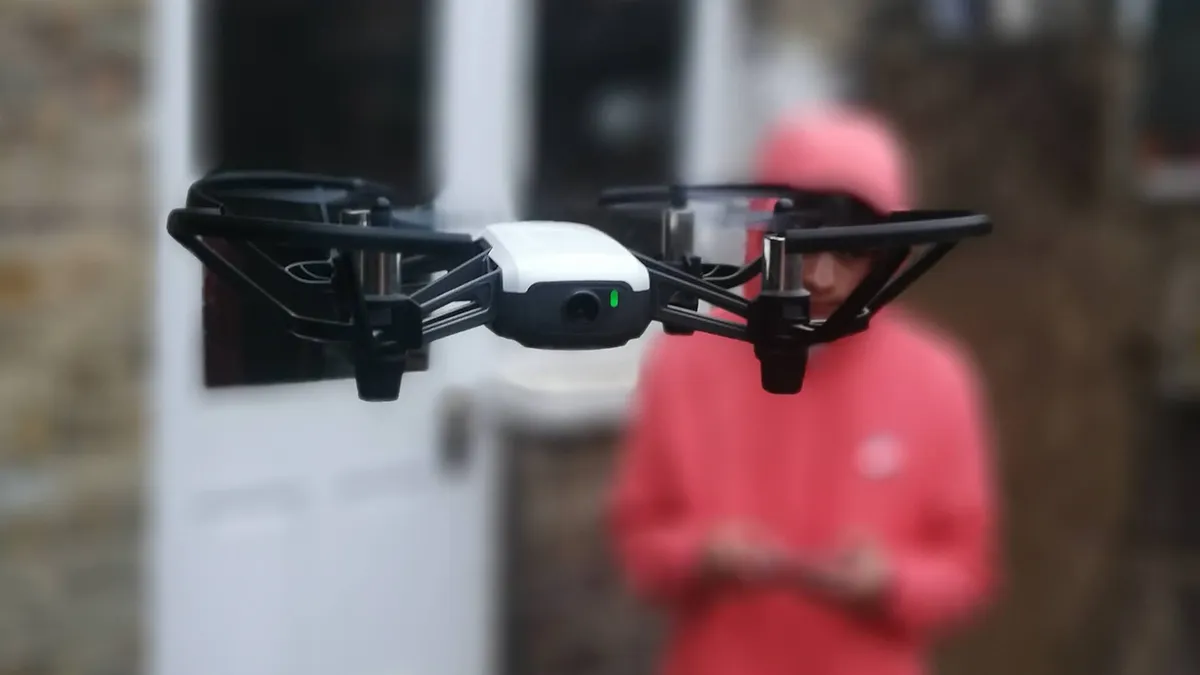


✅ You want to test out drone flying for the first time: This drone is a nice inexpensive way to try out the world of drones without worrying about crashing a seriously expensive bit of kit on your first flight.
✅ You want a fun present for kids: We think this drone would make a fun gift for any adventurous kids in your life, especially as it's safe to fly it indoors as well as in the backyard.
❌ You're looking for high image quality: In line with the price, the DJI Ryze Tello only offers 5MP still images and 720p video, so it's more suited to people who want to have fun flying than to people who want to capture brilliant shots.
❌ You want to do extended flying sessions: The battery life on this drone means that you can only get around 11-13 minutes of flying time.
🔎 DJI Ryze Tello As the cheapest drone on our list, this is ideal for anyone who wants to try out drone flying for the first time and would make a great gift for kids as well. It lacks the image quality of more expensive drones and the battery life is quite short, but it's a lot of fun and a good way to learn some initial flying skills. ★★★★
The DJI Ryze Tello is a great choice not only for those dipping their toes into drone piloting but also cfor hildren. While there are plenty of drones out there for professionals, following our DJI Ryzel Tello review we would consider it an ideal inexpensive first drone for beginners and children.
The Ryze Tello certainly isn't going to win you any awards in the photography and video department with its 5MP camera and 720p video capture. That said, it's still a great drone for learning how to combine flight with image capture. There's no gimbal with the camera mounted directly to the front of the drone.
There are, of course, other downsides, given the price point of the Tello (which comes in around $100). You'll only get around 13 minutes of flight time here, but it's fun to fly and a great introduction into the world of drones for beginners. You can control the drone from the smartphone app it can be paired with. Not to mention, it can be programmed using Scratch making it a suitable choice for kids.
The DJI Telly Ryze can take off from the palm of your hand and be flipped in mid-air. You can even fly it indoors thanks to the propeller guards and the fact it weighs just 80 grams. It's worth noting that the flight distance on this drone is limited to 100m, however, and power is limited so only fly outdoors on windless days.
The drone is easy to use and fun for children especially, and the phone app works well for control. Compatible physical controllers can also be purchased separately from Amazon if you'd prefer a more traditional flying experience but, either way, it remains a fun drone and is incredibly easy to use.
- Read our full DJI Ryze Tello review
Attributes | Notes |
|---|---|
Design | Sleek, lightweight and affordable, with propeller guards |
Functionality | Easy to fly with fun trick flight features |
Performance | Responsive controls and basic camera functions |
Best for simplicity


✅ You want quality at an affordable price: This drone is a notable step-up from its predecessor, has a quality camera, useful features, plenty of internal storage and is comparatively inexpensive.
❌ You're looking for a professional-grade drone: Drones with better cameras, more features and more power are available, but cost a lot more.
🔎 DJI Ryze Tello is the ideal drone if you're looking for something with a few useful features, a decent camera and you don't want to worry about drone regulations. It's the best for simplicity. ★★★★1/2
The DJI Neo 2 is the best drone on the market for pure simplicity. If you're looking for something that doesn't require checking drone regulations, has some, but not many, useful features and functions, has a good camera, is inexpensive and has just enough high-end specs to have an enjoyable flying experience, you want this drone.
Firstly, its camera. A 12MP 1/2-inch CMOS sensor allows for decent photo capture, but only in JPEG format. Video is a bit better, as you can capture 4K footage up to 60 FPS, and 1080p (full HD) up to 120 FPS. The image stabilization is a highlight of this drone as it's a dual-axis gimbal partnered with Rocksteady Electronic Image Stabilization allows for really solid and steady photo capture.
Useful functionalities and features include good subject tracking and impressive omnidirectional obstacle avoidance. The Neo 2 also features Return to Home, which is great for beginners, as the drone will automatically come back to you when the battery starts to run low. The only downside is that, with the batteries available, this will be after around 10 minutes of flight.
Internally, you get 49GB of storage, which is a massive step up from the first Neo's 22GB. In real terms, this should give you up to 105 minutes of 4K/60fps video, up to 175 minutes of 4K/30fps video, or 241 minutes of 1080p/60fps video. You can check out our full DJI Neo 2 review for a closer look.
- Read our full DJI Neo 2 review
Attributes | Notes |
|---|---|
Design | Cinewhoop style design, lightweight and portable, several kits available |
Functionality | excellent modes and features, 49GB of internal storage |
Performance | 12MP 1/2 inch sensor, 4K video, excellent image stabilization |
Best for selfies


✅ You want to capture your outdoor adventures : This drone offers 8K video and images coupled with excellent tracking.
❌ You're on a budget: Powerful and versatile as it is, this drone is not cheap.
🔎The HoverAir X1 PROMAX drone is a superb drone if you're posting to social media or otherwise recording your own exploits. This is the ideal drone if subject tracking is your aim. ★★★★1/2
The highest resolution selfie drone around, this is is an excellent purchase if you're looking to capture your own adventures. In our HoverAir X1 PROMAX review, we remarked that "This small and highly portable selfie drone punches well above its weight in terms of image capture."
You can't argue with its 8K video capture, and its image stabilization gives its photo and video quality another boost. And while this drone is ready to go out of the box, you can purchase a range of helpful accessories.
Couple that with its subject tracking and you've got a drone that's excellent for social media use, film work or anything where you want a bird's eye view of the action.
- Read our full HoverAir X1 Promax drone review
Attributes | Notes |
|---|---|
Design | Compact, lightweight and folding |
Functionality | excellent modes and features, 49GB of internal storage |
Performance | Excellent video quality and image stabilization |
Best drones FAQs
What is the best drone?
We think the DJI Mavic 4 Pro is the best drone overall. It features excellent cameras and quality for shooting both stills and videos. It's packed full of useful features, is a direct upgrade on the Mavic 3 Pro (which is still very good) and overall, is a cut above anything else on the market. the DJI Mini 3 is the best for beginners.
How do I know if a drone deal is genuine?
Here at Space.com, we regularly search for drone deals and part of this process is searching multiple reputable retailers, checking the prices of drones and comparing them to the model's price history, to check whether a price is low in comparison or if a 'before price' has spiked to make it look like a deal, when in fact it isn't.
When is the best time to fly a drone?
It all depends on what you want to achieve from your drone flight. If you're flying for the love of flying, anytime during daytime for maximum visibility and when there is as little wind as possible. But, if you're looking to shoot footage, daytime will give you maximum visibility or blue hour for nighttime shooting. That means about half an hour before sunrise or after sunset, when there's a blue glow to the night sky, which gives you more visibility in nighttime conditions. If you choose to fly at night, you must attach a suitable light to your drone for collision avoidance.
What regulations do I need to consider?
It's crucial that you abide by the rules and regulations set by the Federal Aviation Administration (FAA). If your drone weighs more than 250g, you'll have to register it with the FAA.
You can also fly your drone up to 400ft in the air, providing you maintain a clear line of sight with it. If your drone is within 400ft of a structure, then you can fly it up to 400ft above that structure. And, if you're using FPV goggles, you must have a spotter to maintain visuals on your drone.
What does the U.S. foreign drone ban mean for me?
Regulations aside, you may have heard that the U.S. has banned foreign drones. This means that, going forward, new models of foreign-made drones will not be allowed into the country.
In the short term, drones are unlikely to disappear from shelves, both online and offline, but more advanced drones won't make it to the United States. We may see more domestic-made drones but, right now, there are no consumer-level drones made in the US.
Can I fly a drone at night?
Yes. Most of the same rules and regulations apply as flying during the day but you must also attach an anti-collision light to your drone which must be visible for a minimum of three miles. Capturing footage is possible with most quality drones and we recommend blue hour as the best time to do this which is from half an hour before the sun goes down to half an hour after, where there's enough light for natural visibility but it's still dark outside.
Buying advice
Buying a drone is exciting but can also be an overwhelming experience, considering the myriad options on the market. While there are hundreds of models to choose from, the advances in drone technology mean you're unlikely to find a really bad quality drone. However, they're usually a considerable investment, so it's worth thinking about what you're looking for in a drone to find the perfect fit for you.
DJI is the market leader in drone technology. Their models also tend to be relatively good value considering their quality and the features they come with. DJI has an extensive lineup, with models for all budgets and abilities. Among other famous brands, you might want to consider Autel, Parrot and Skydio, all of which have quality products and unique features.
Remember that if you're buying a drone weighing more than 249g, you'll need to register as a pilot with the CAA (UK) and FAA (US). The process is quick, easy, and relatively inexpensive, and failure to do so could result in a considerable fine.
- Read more: Drone regulations
How we test
Space.com reviews a wide range of products, from telescopes, drones, and cameras to 3D printers and VR headsets. Consequently, our reviews have varying formats depending on the type of product being tested. No matter what we’re covering, though, there are three core areas that we look to test when writing our reviews: design, functionality and performance.
The best drones typically offer a combination of features, functionality and photo and video quality. Testing takes place over several days in different locations, environments and weather conditions (excluding rain) to assess flight performance, flight features, overall handling and image quality for both photo and video capture.
Drones are flown using manual flight patterns to test the connection between the aircraft and the controller, latency between the two, the accuracy of the controls, app connection, reliability and the flight experience in general. Automated flight patterns and collision avoidance are also typically available with these models, so these are always tested to check accuracy, reliability and ease of use.
All testing is conducted in a way that meets local aviation laws and restrictions to ensure that all flights are safe and legal. Drone laws vary from region to region, so you must check local laws and make sure that you're following the guidelines for your country before embarking on your first drone flights.
April 22: We have rewritten the strapline and intro as well as checking the availability of these models.